Synergies between Law and Music - 2026 Edition
Summer Course Recap
Event information
- Place:
- Facultad de Derecho USC
- Start date:
- July 1, 2026
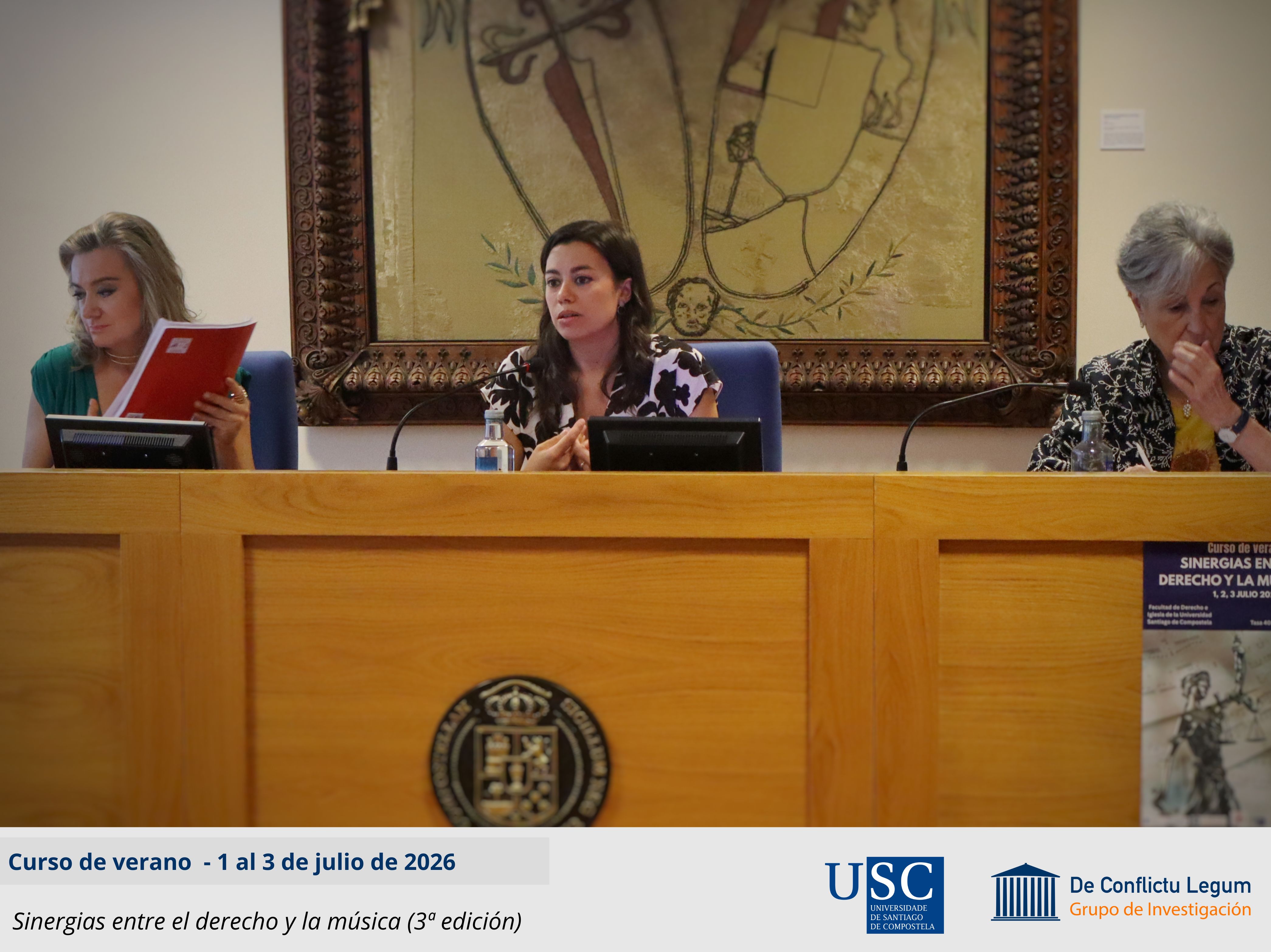
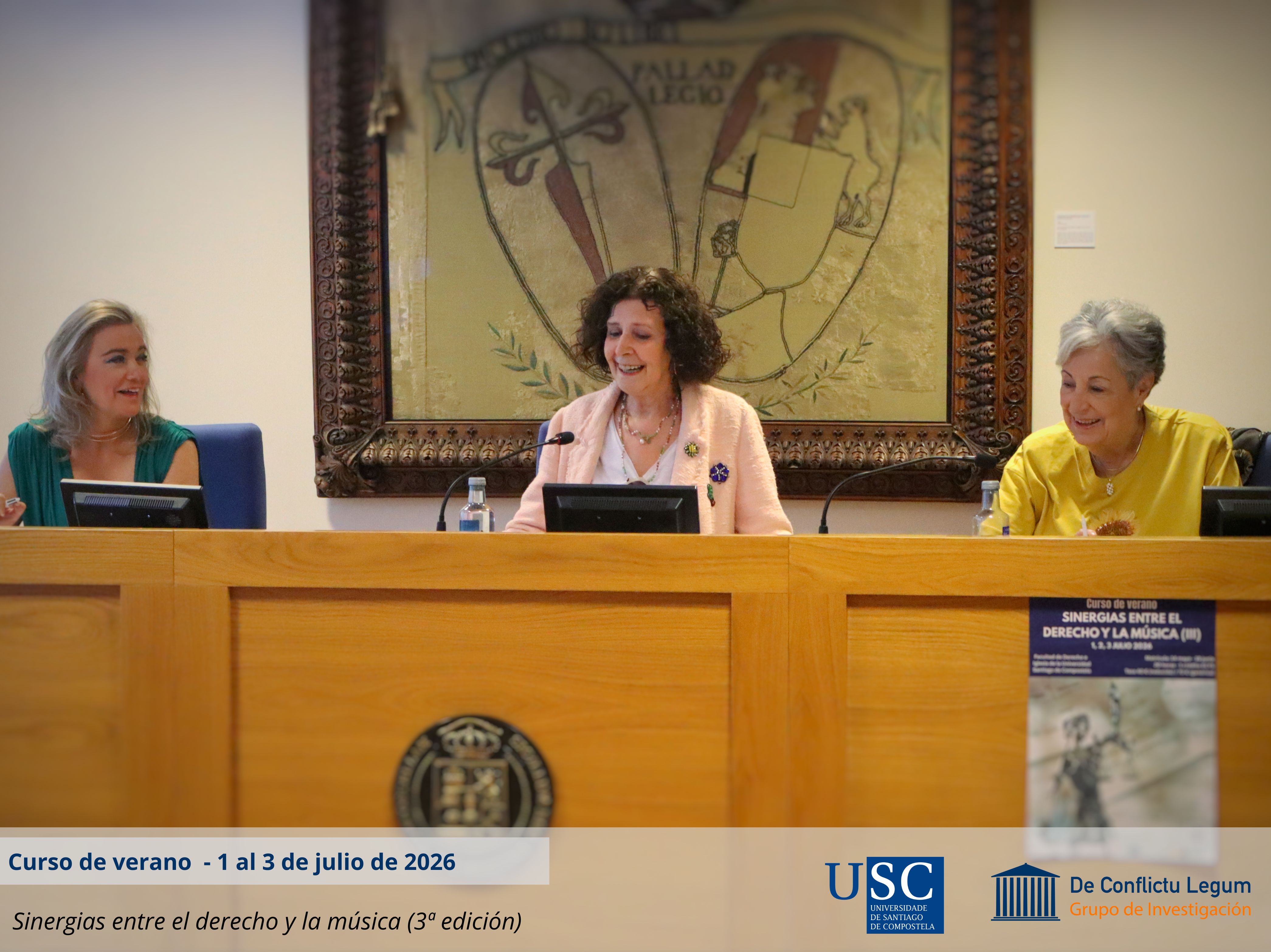
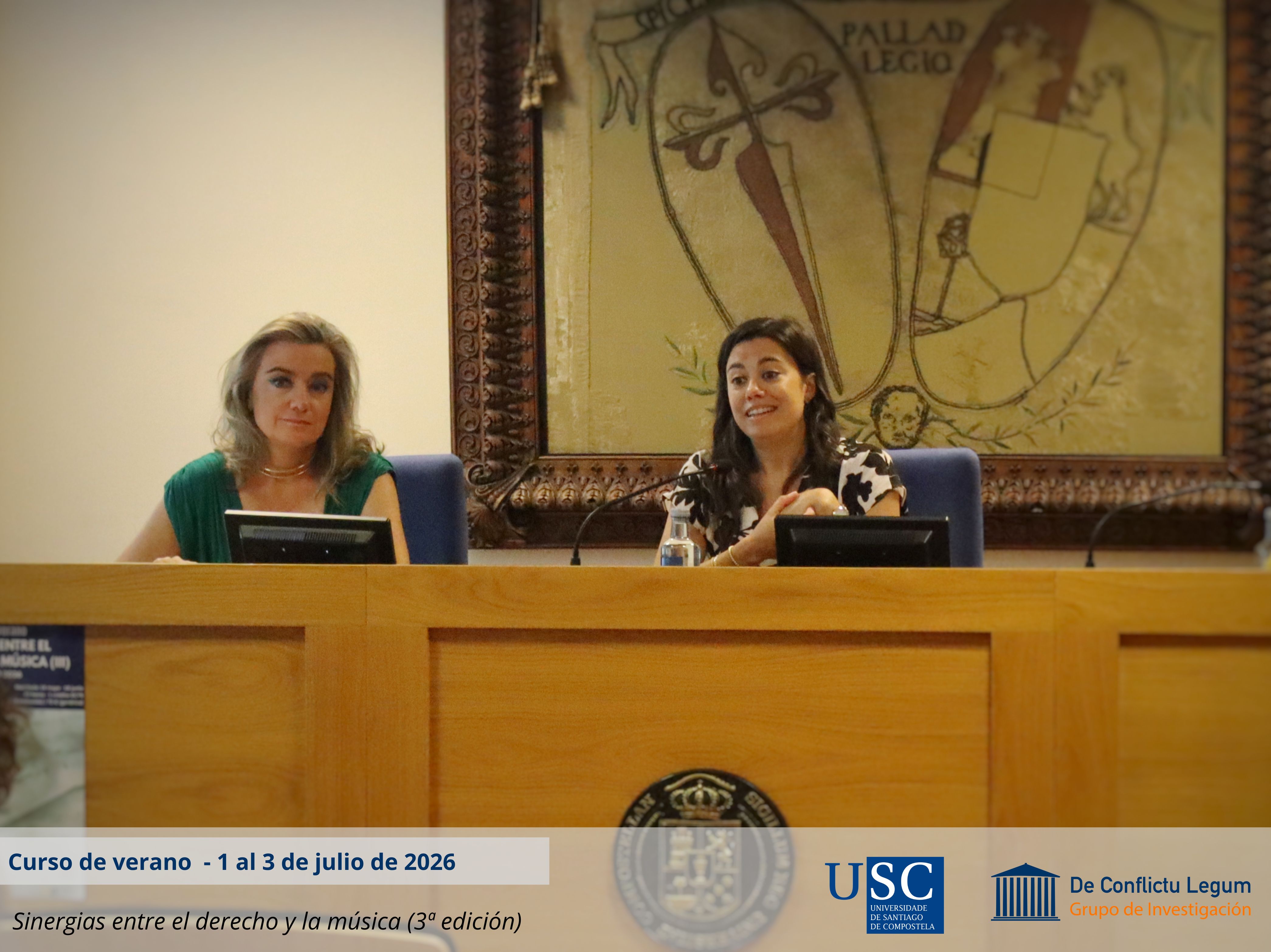
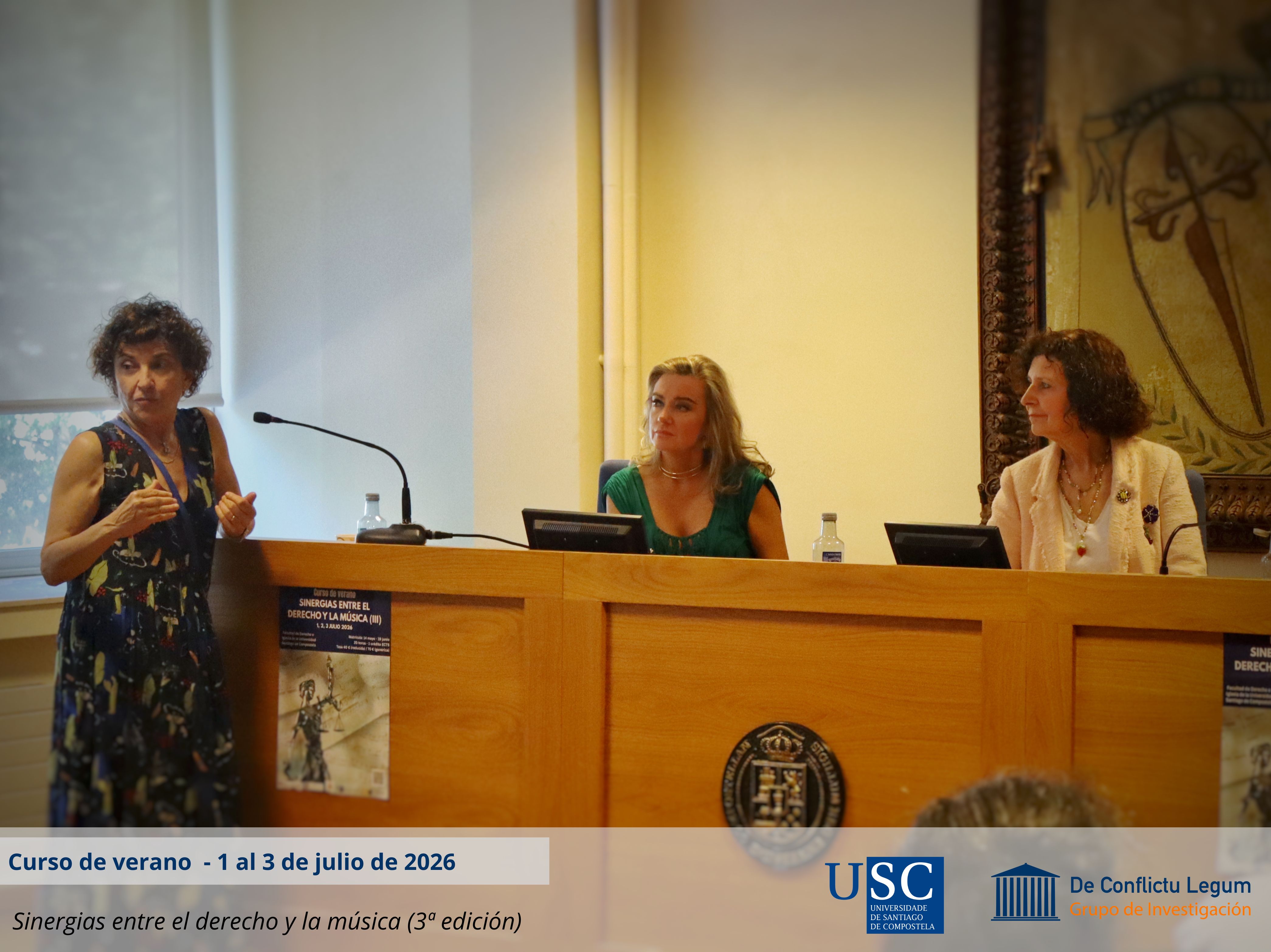
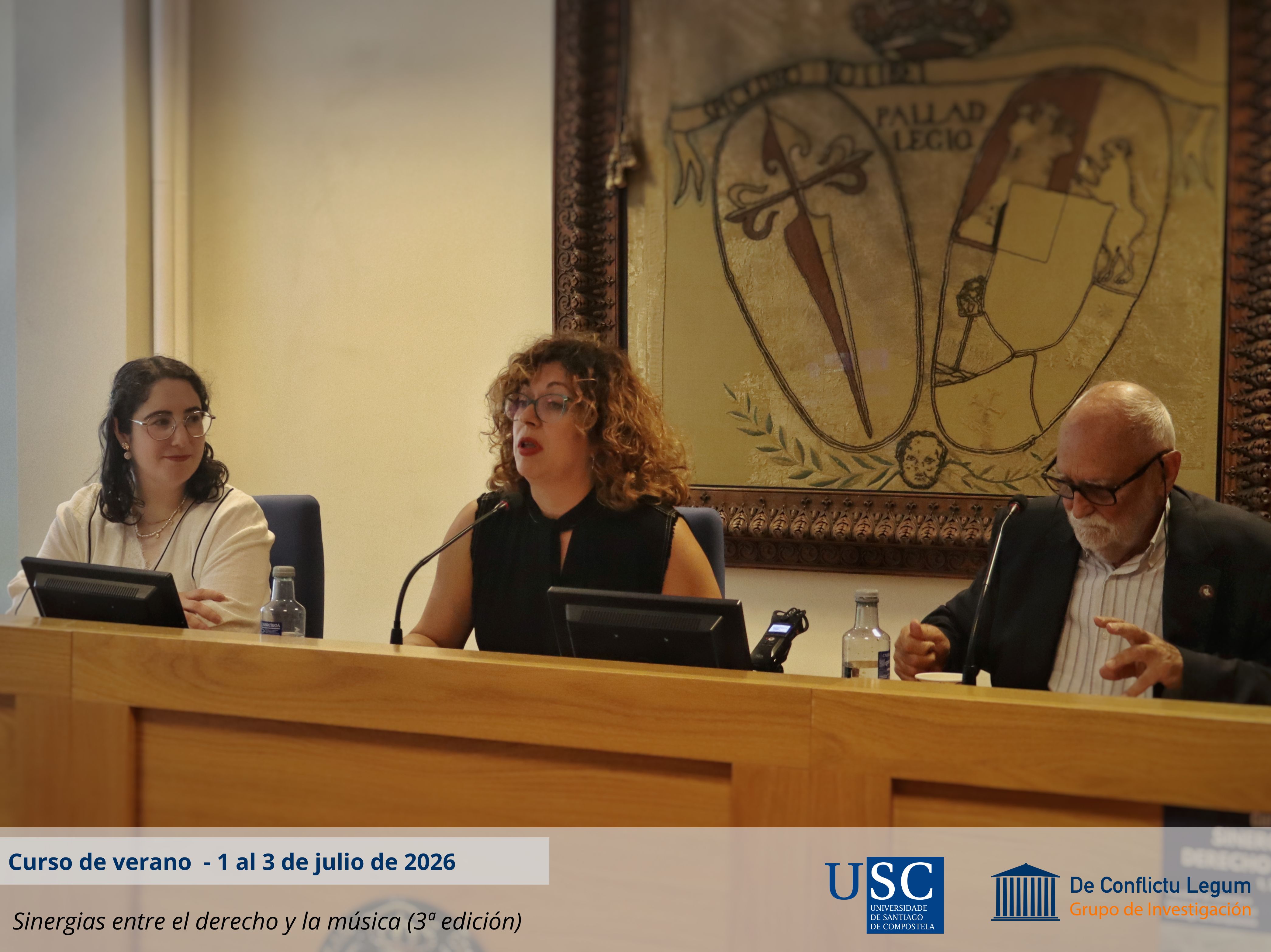
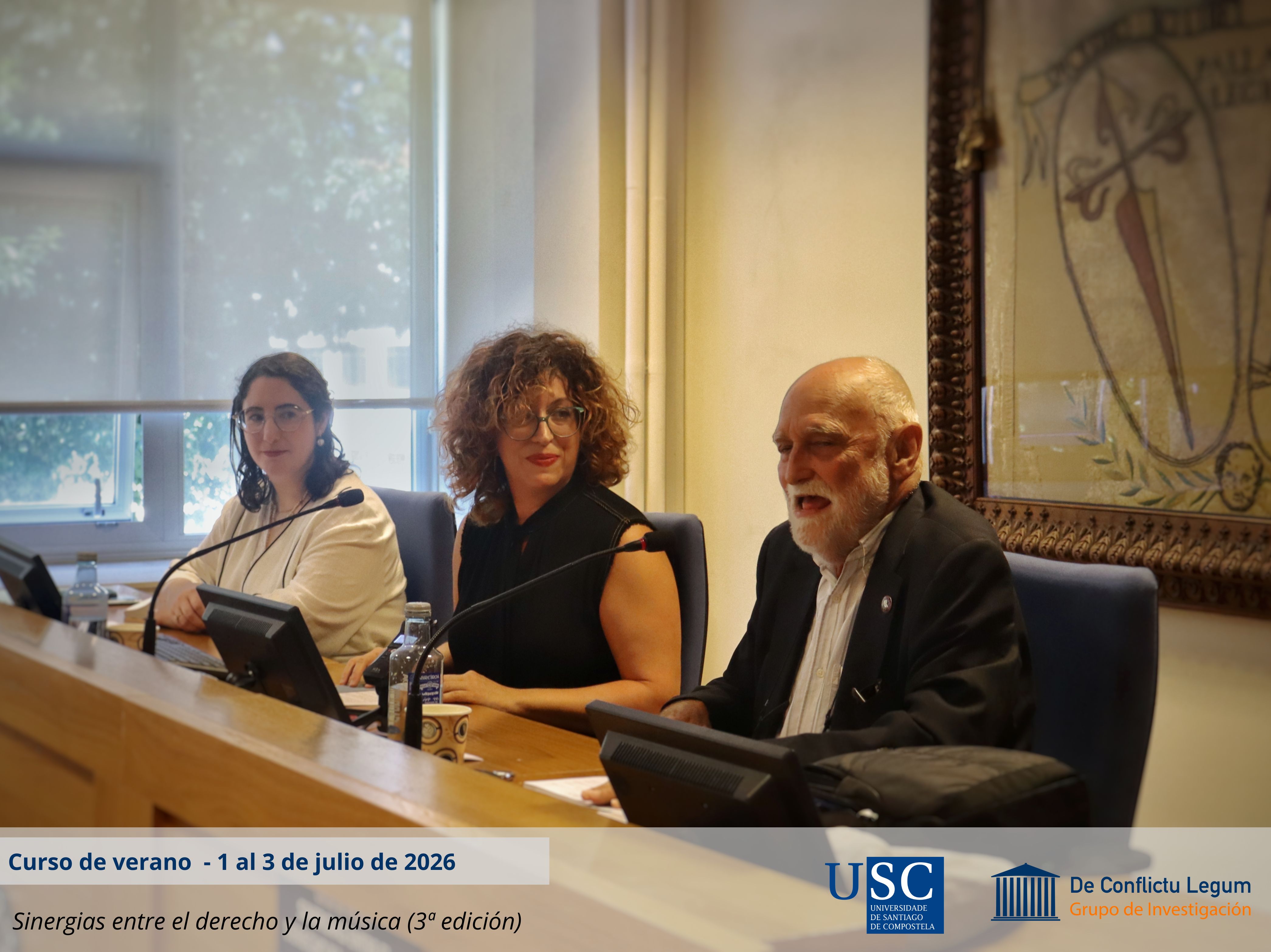
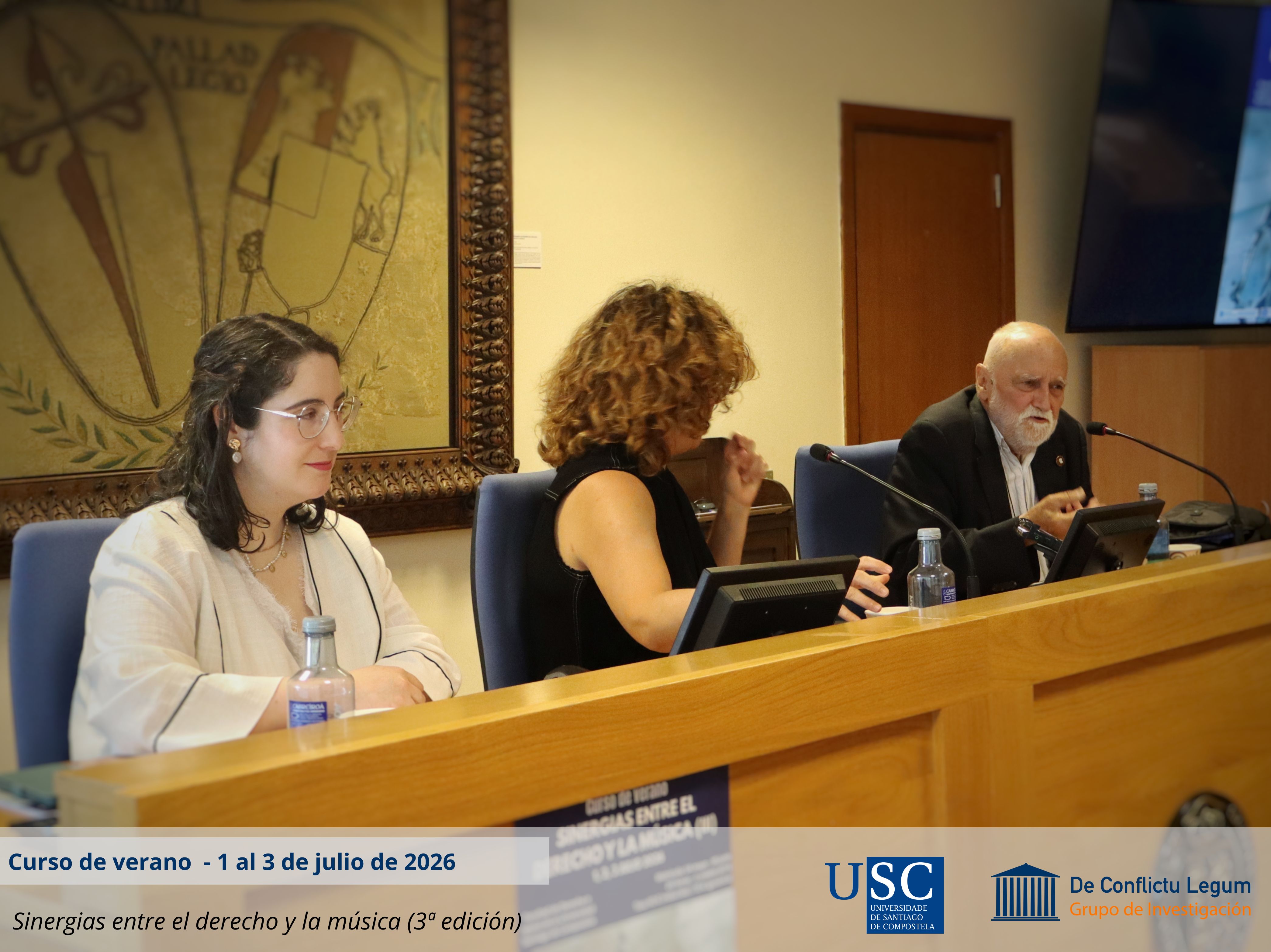
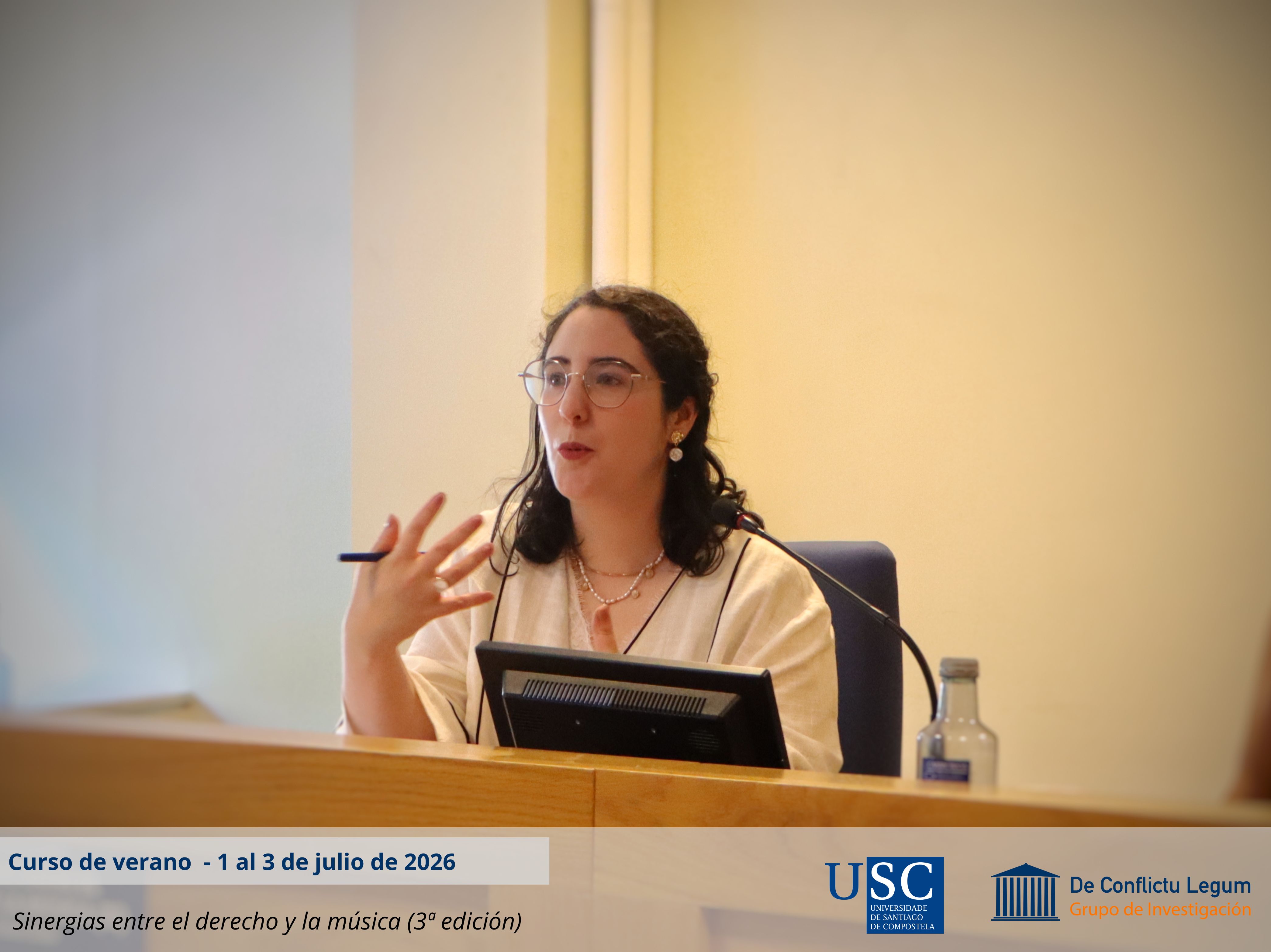
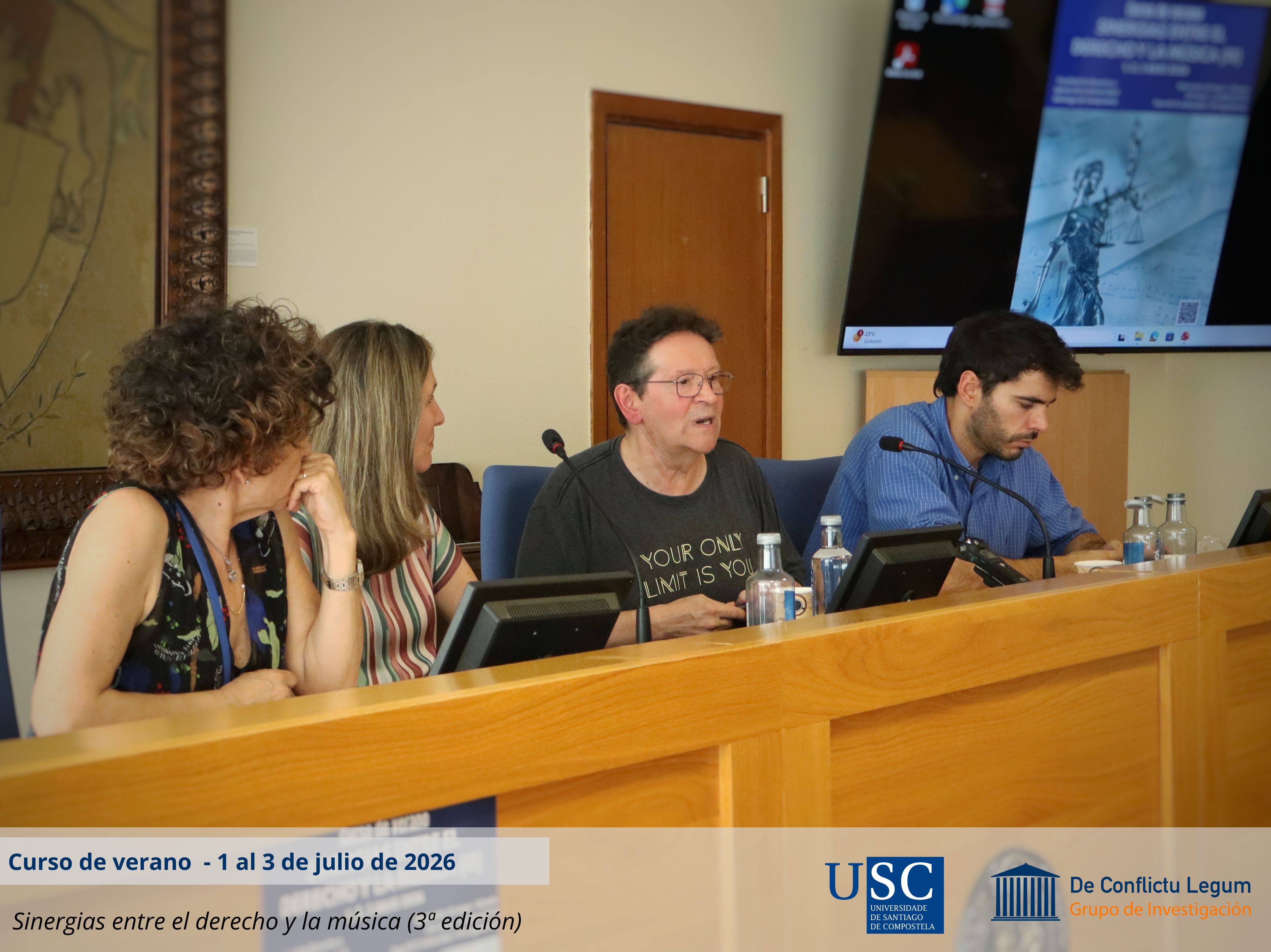
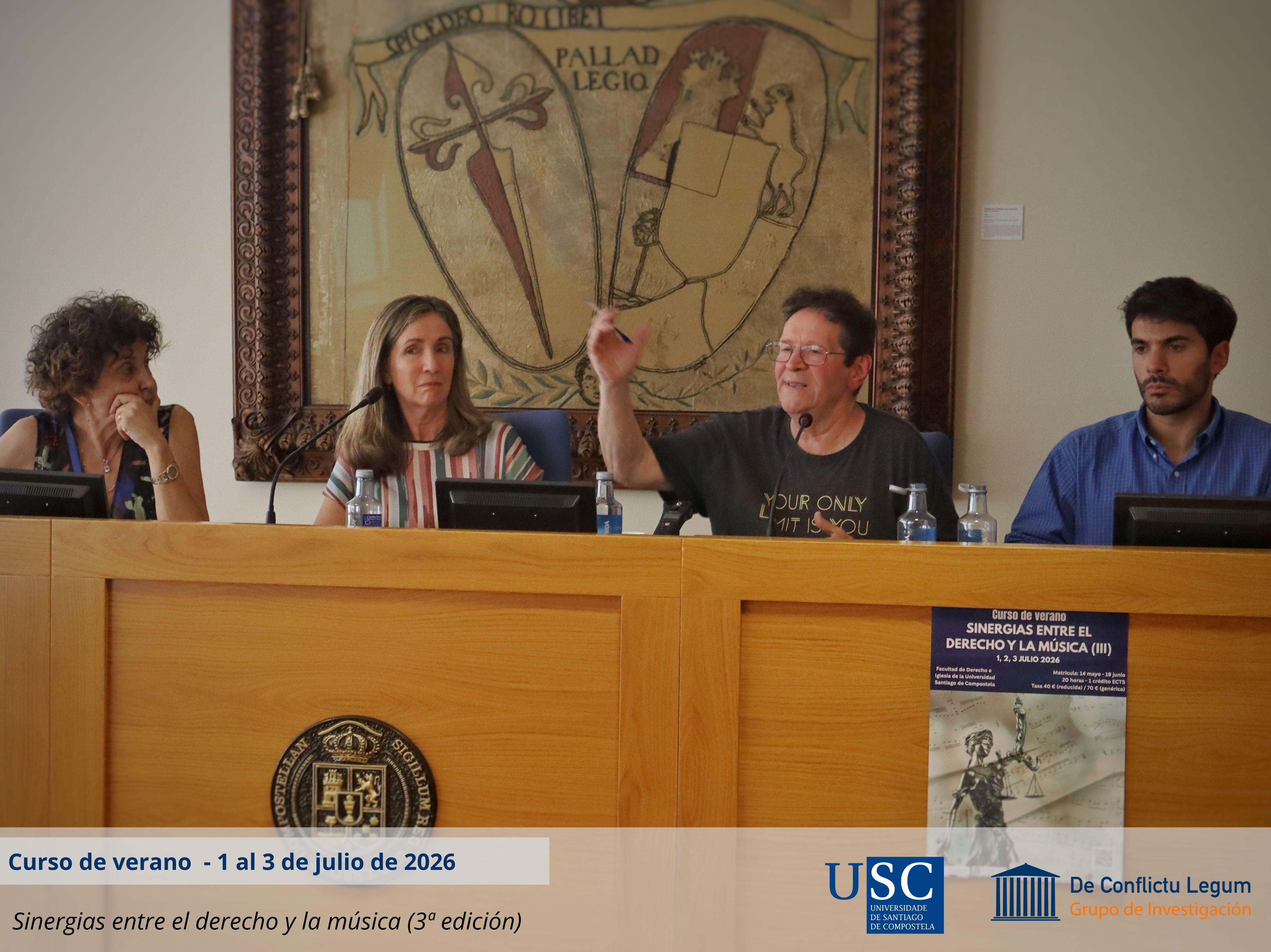
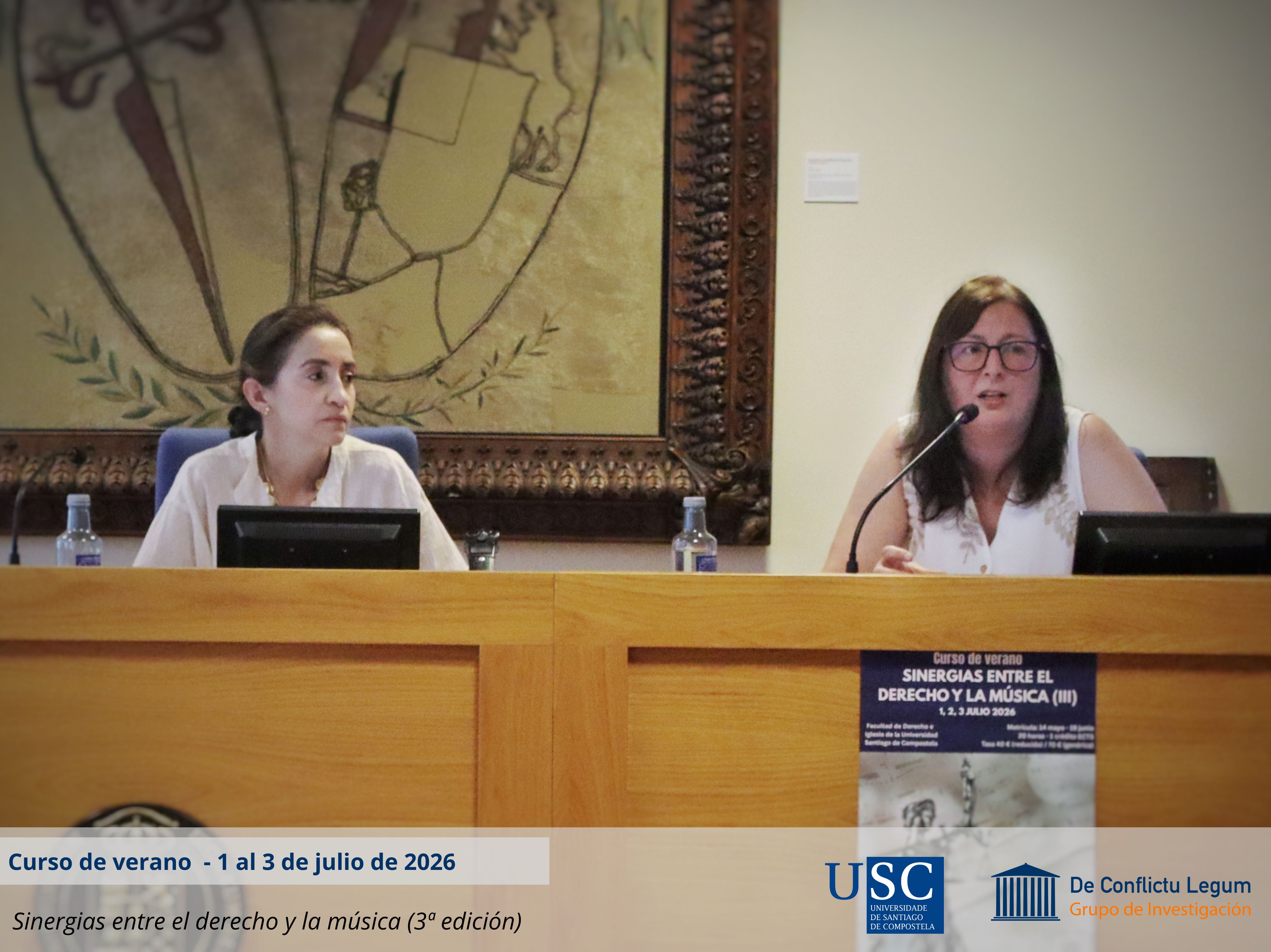
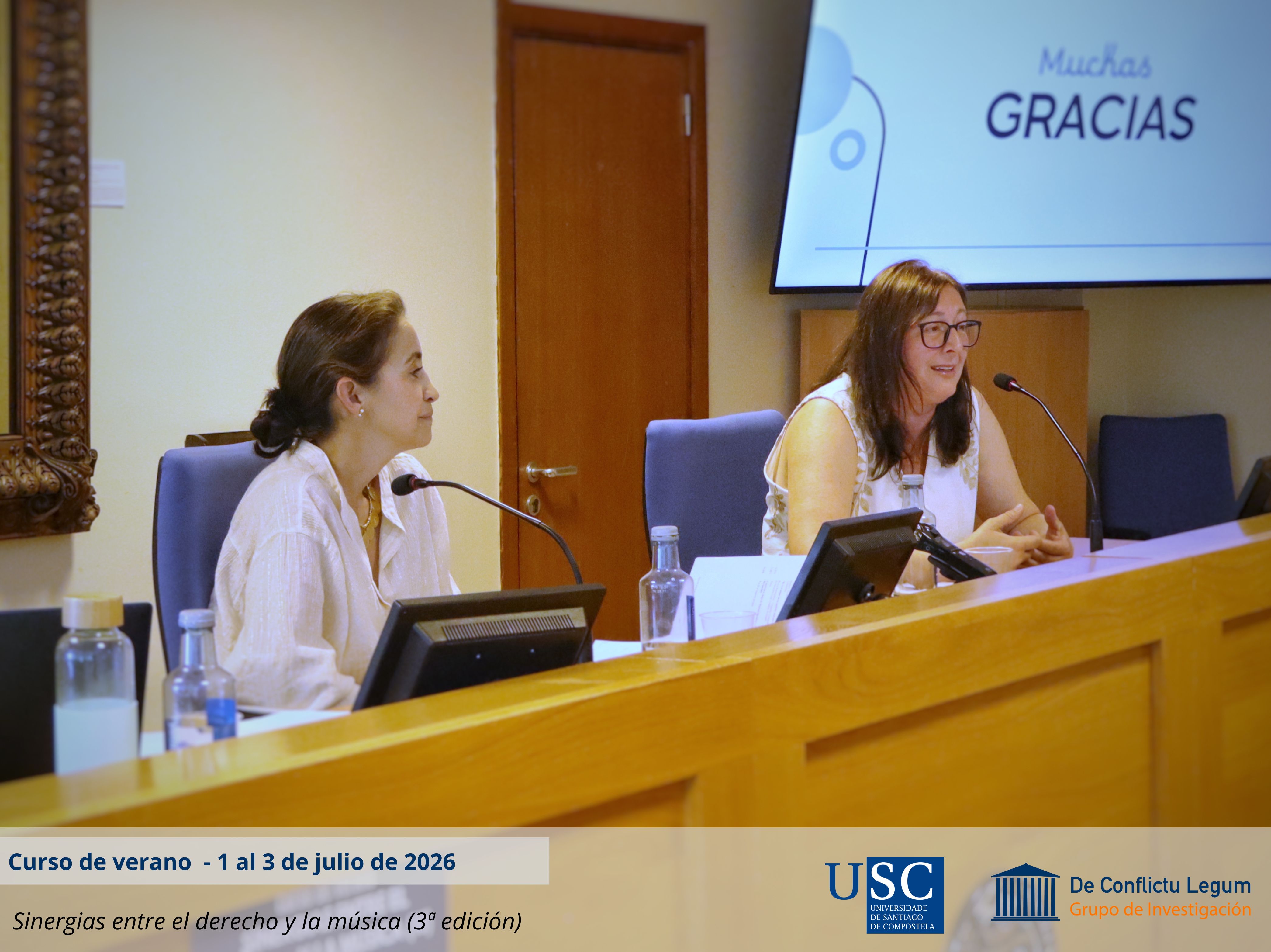
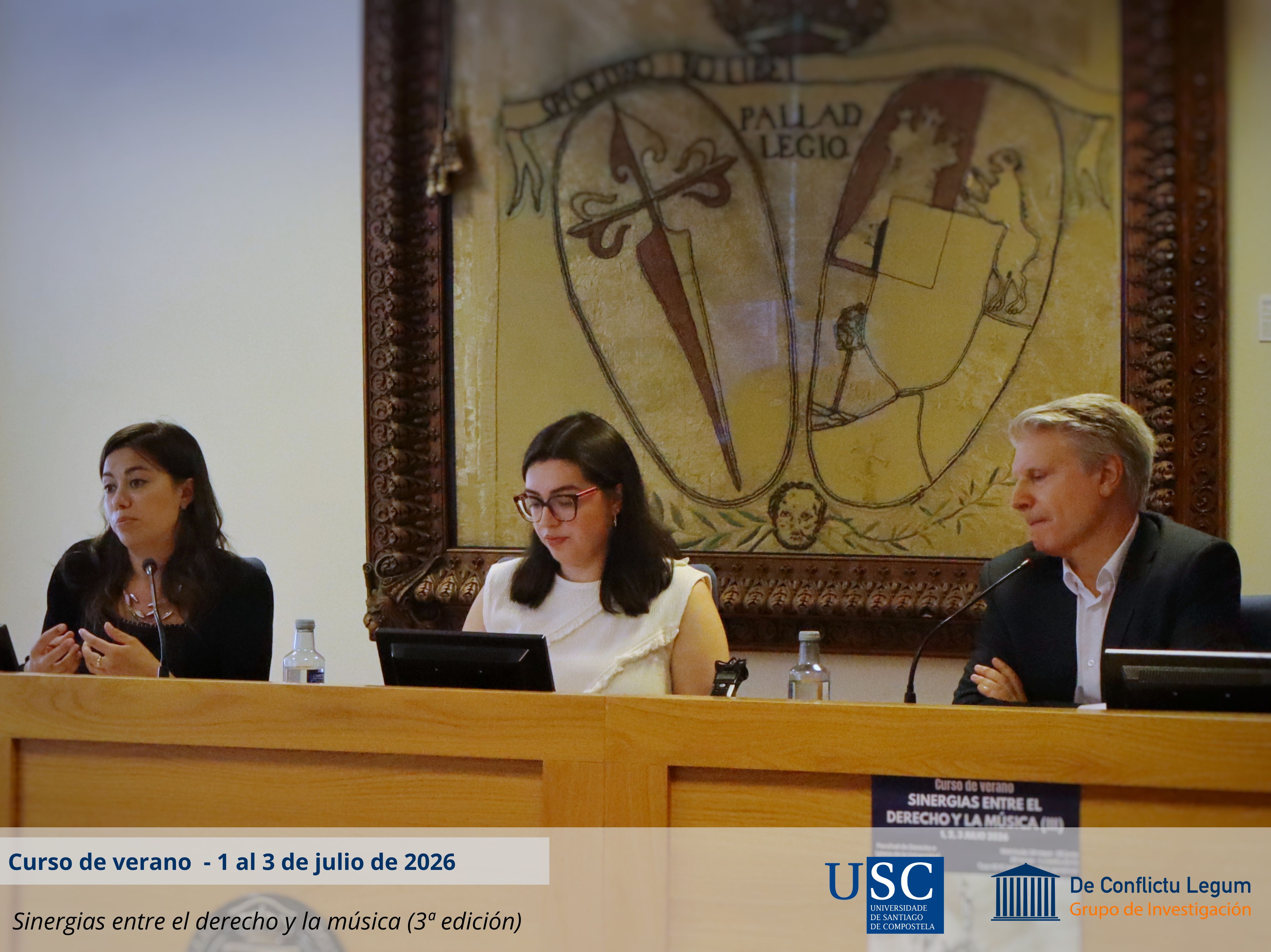
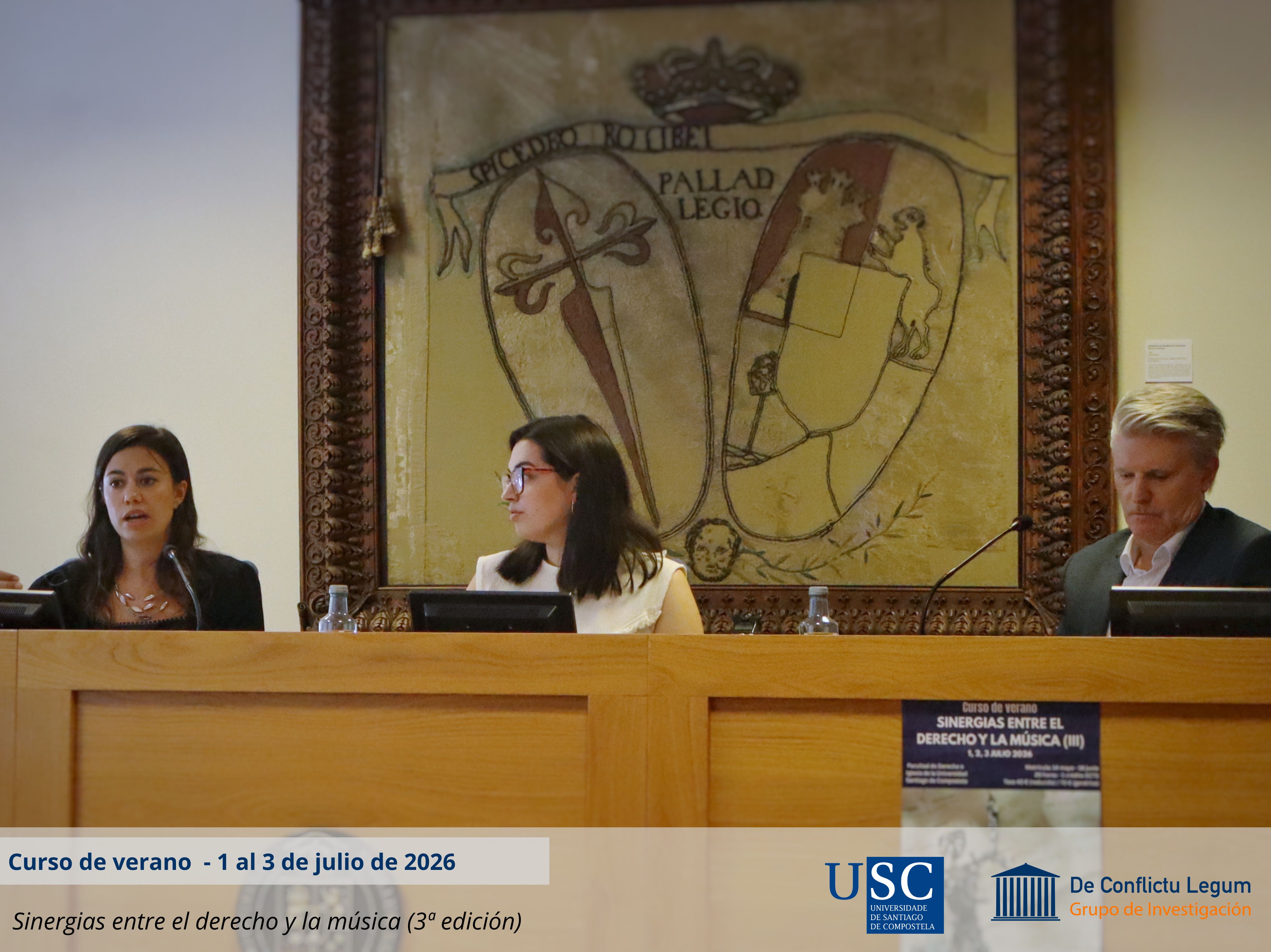
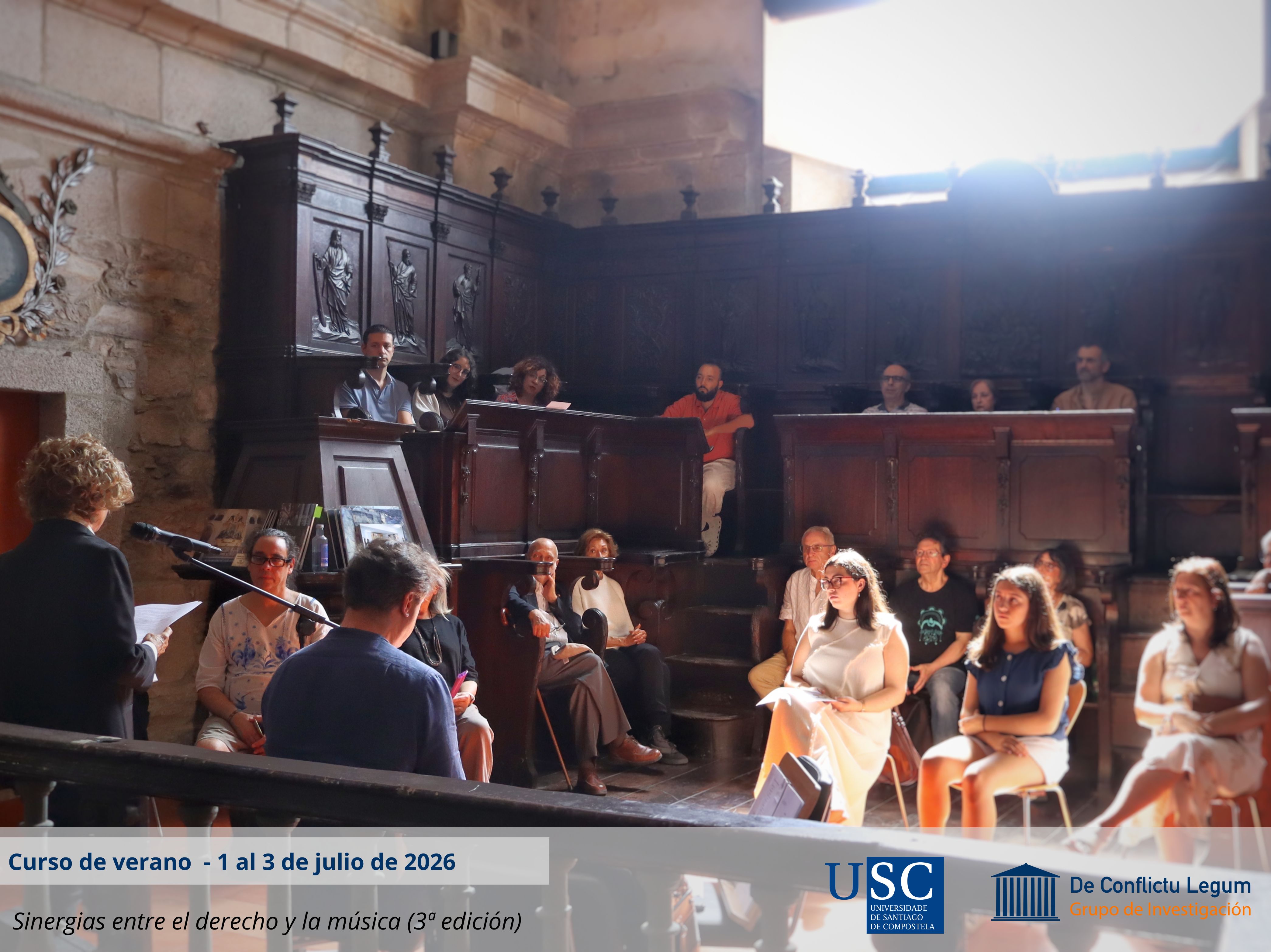
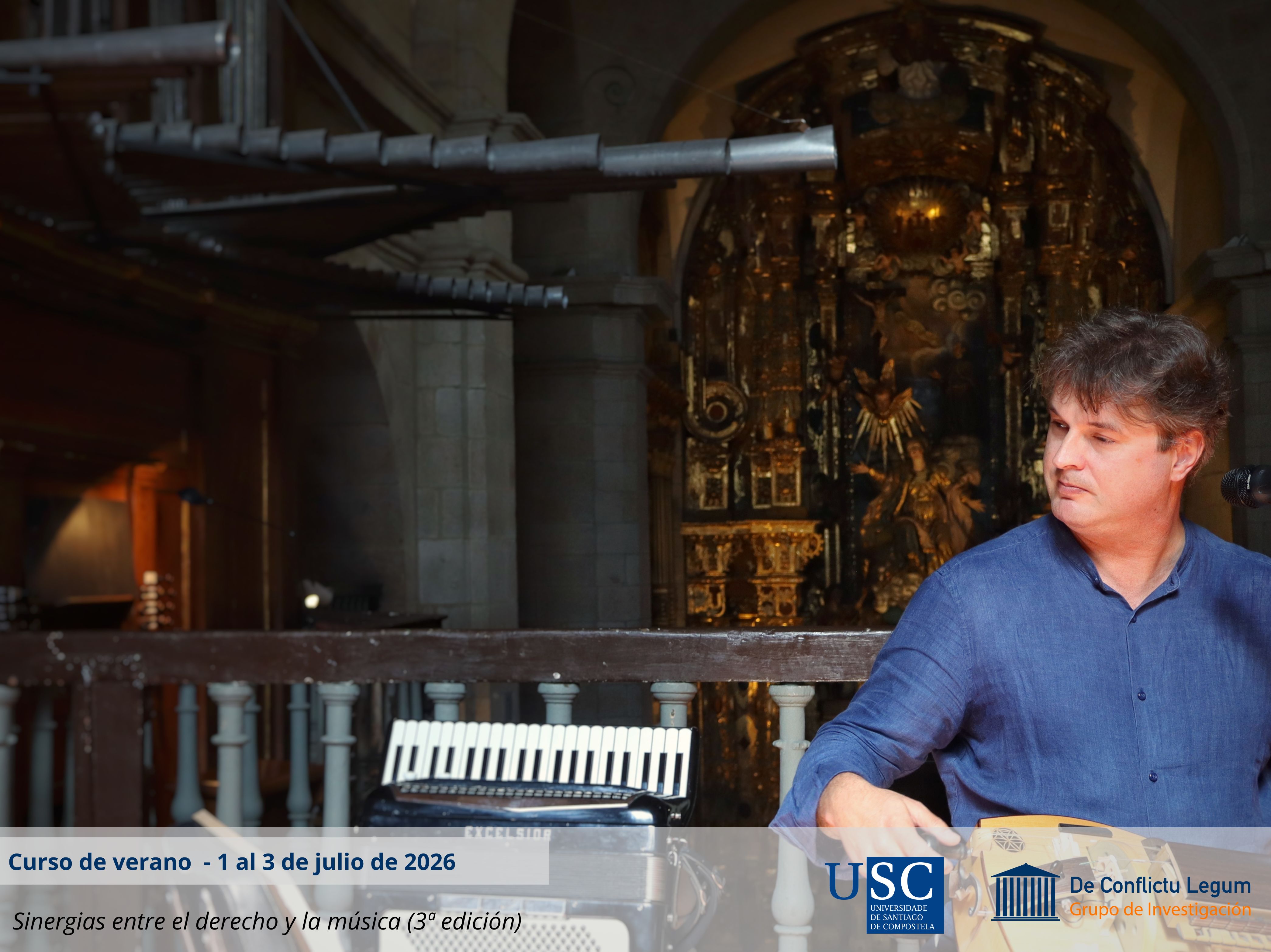
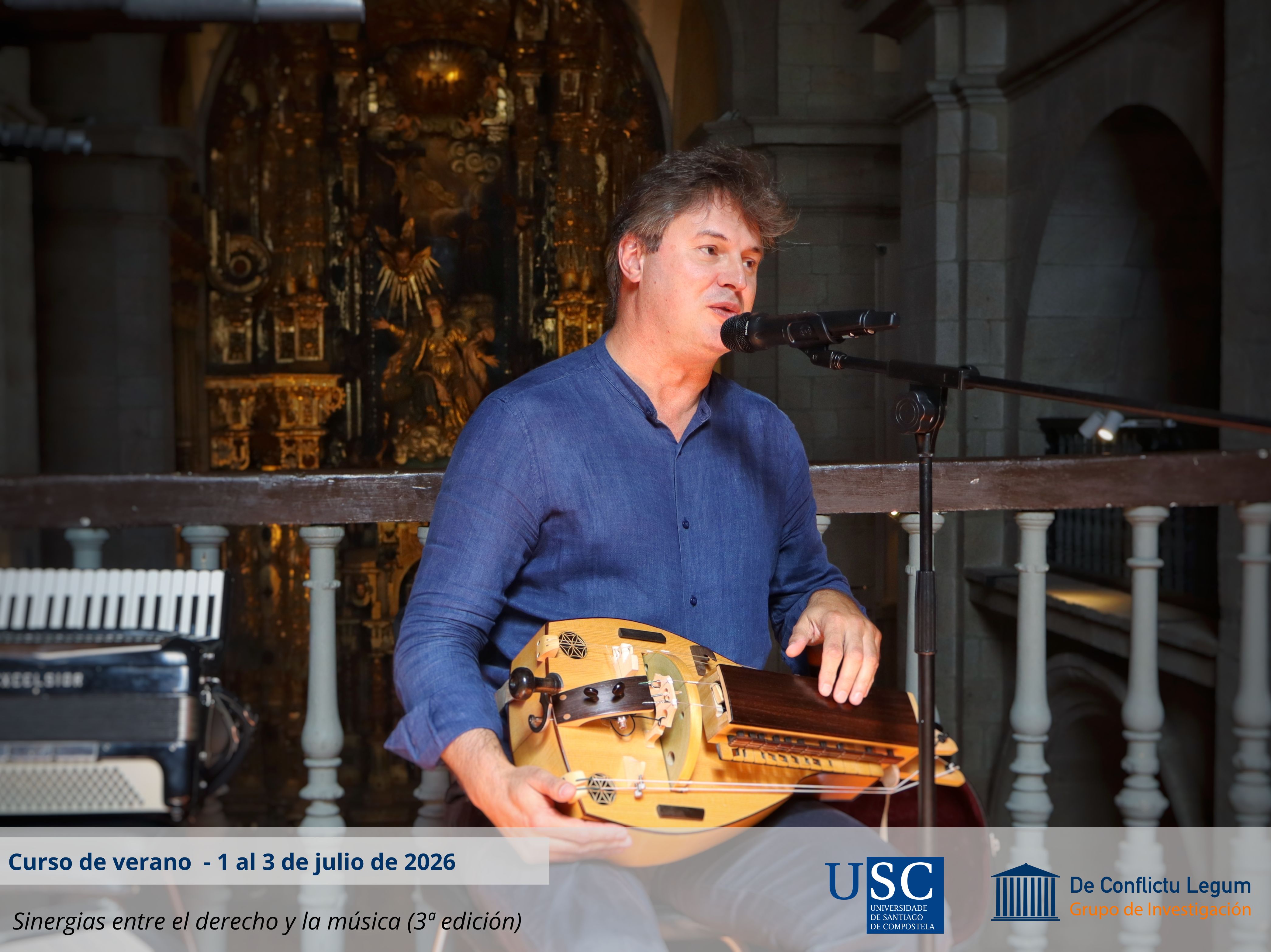
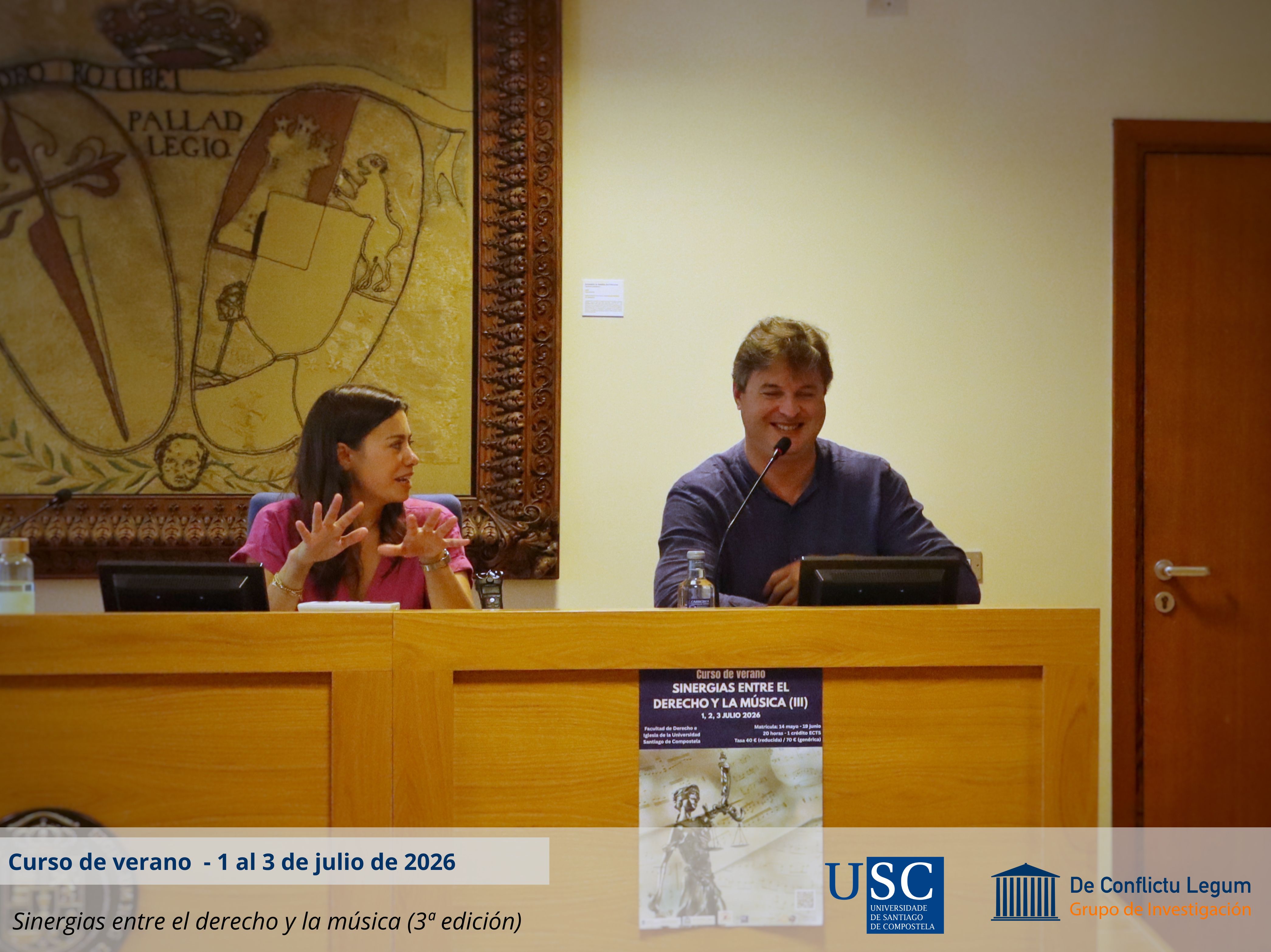
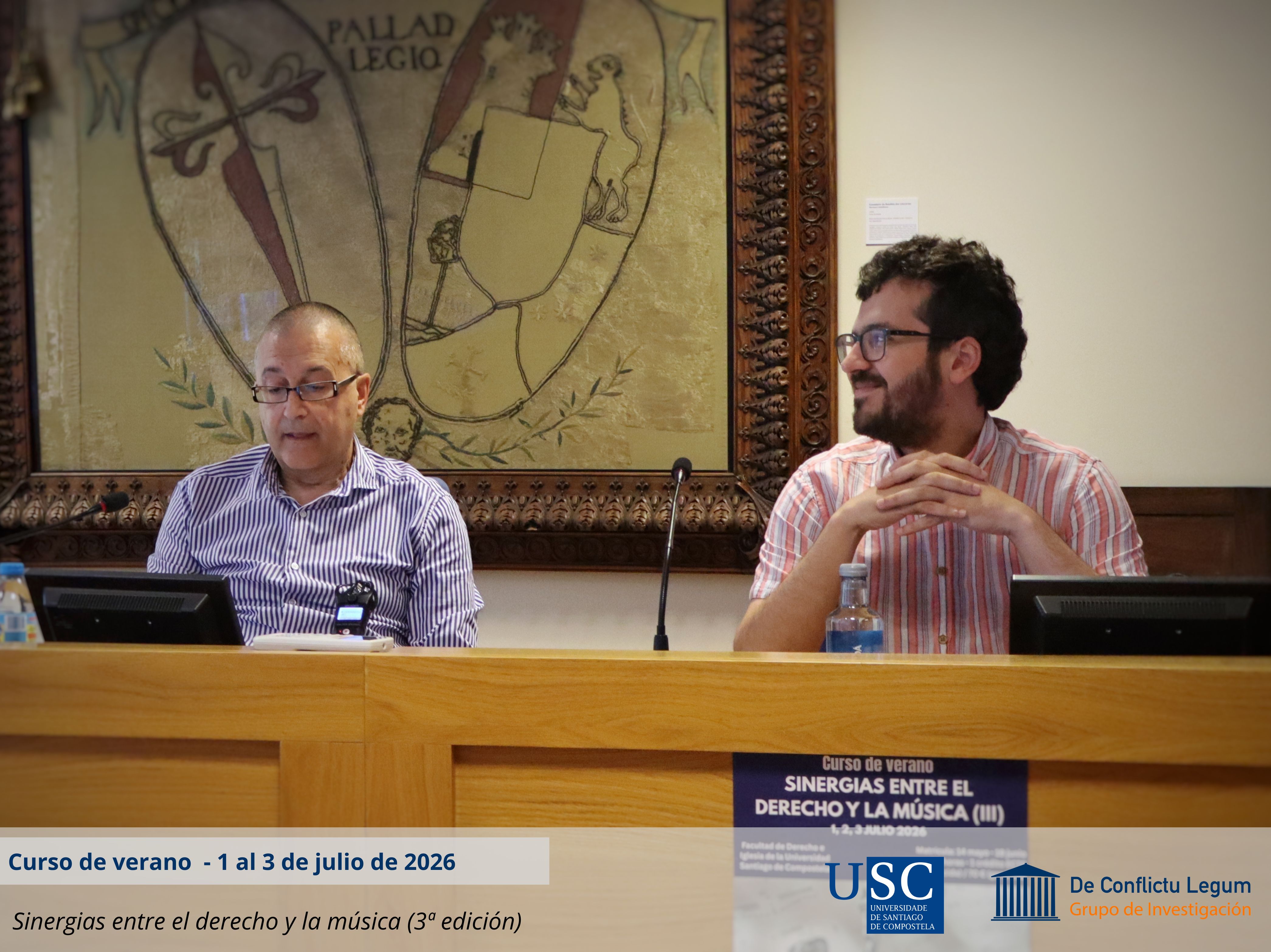
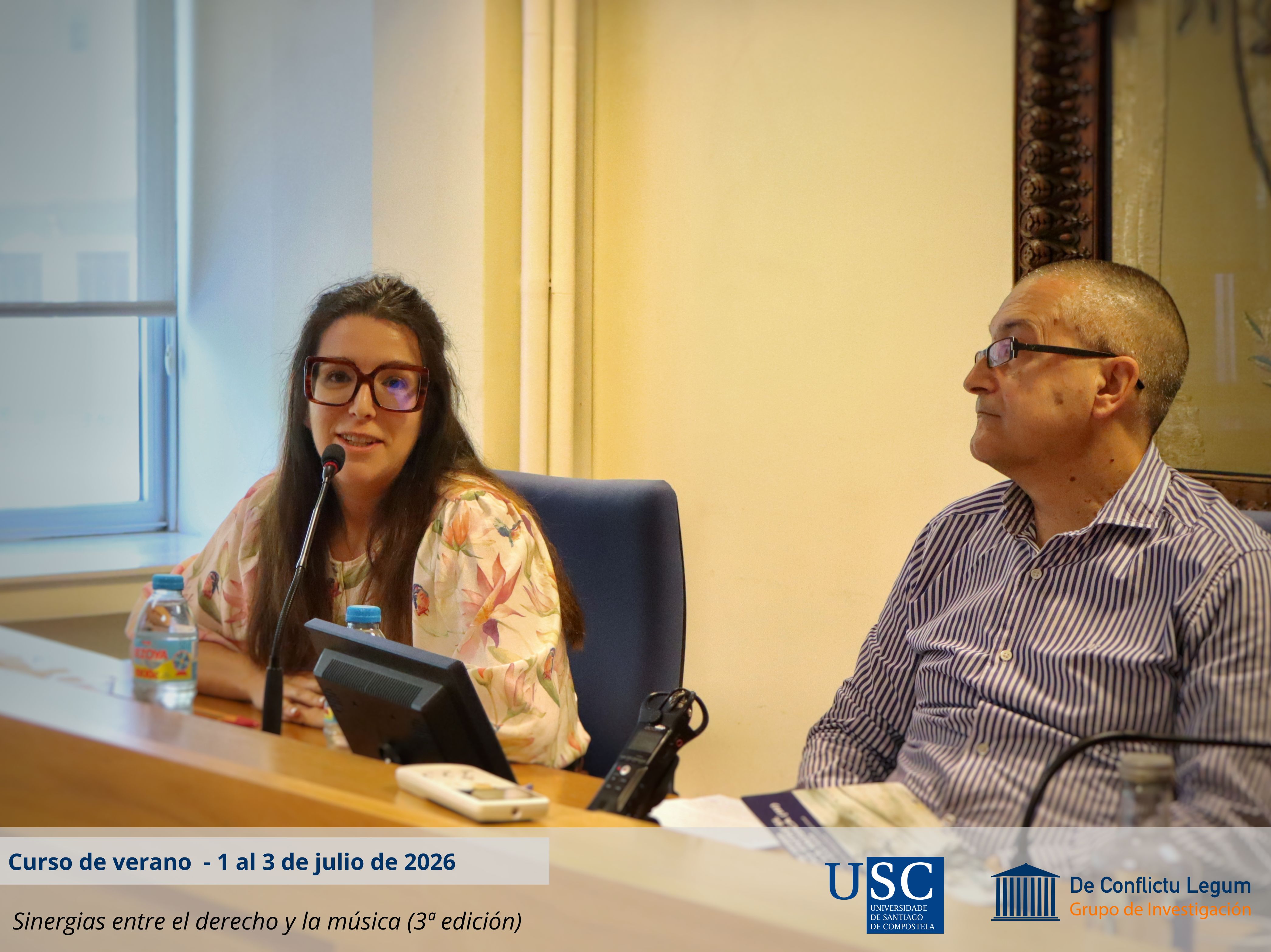
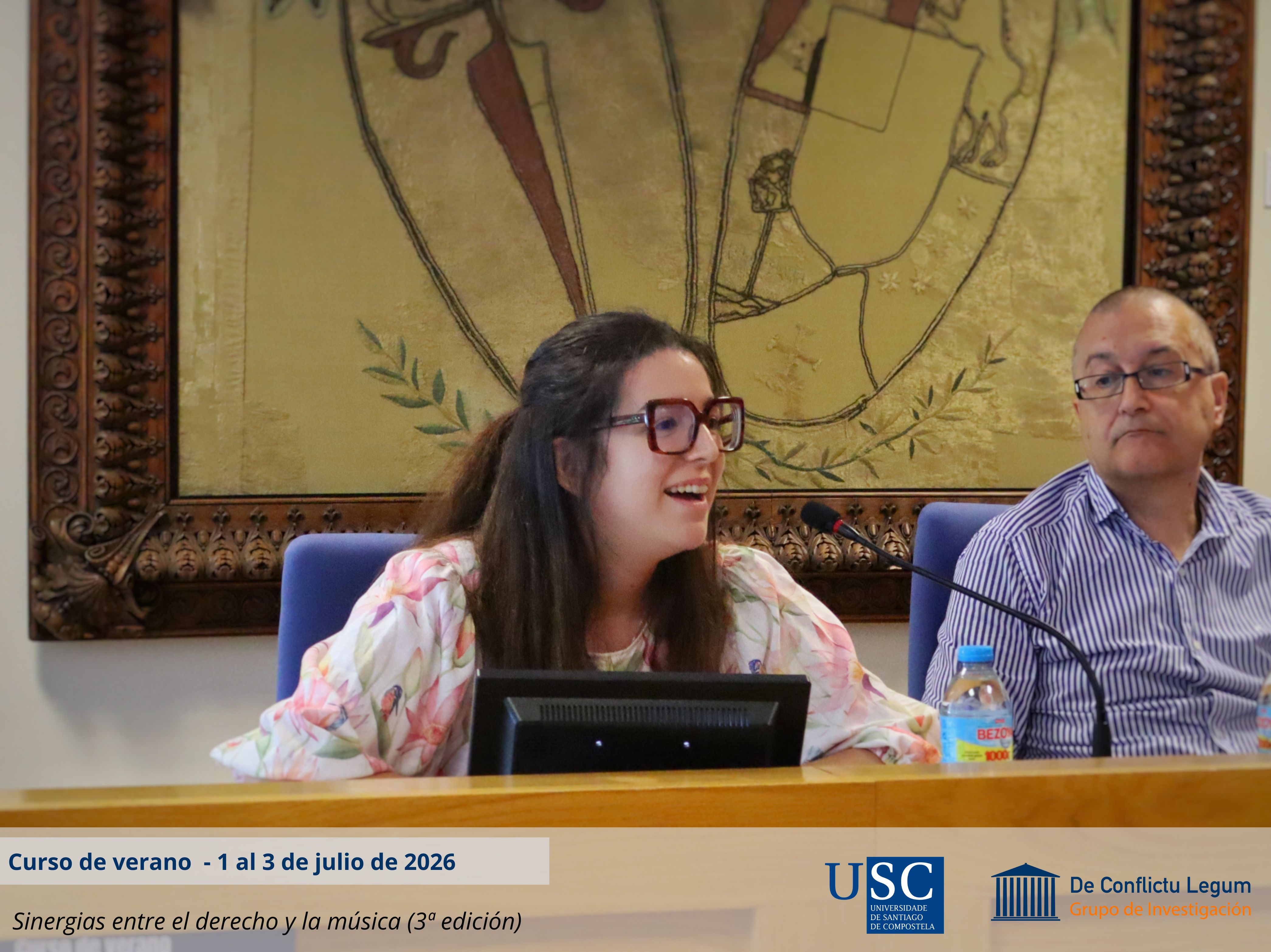
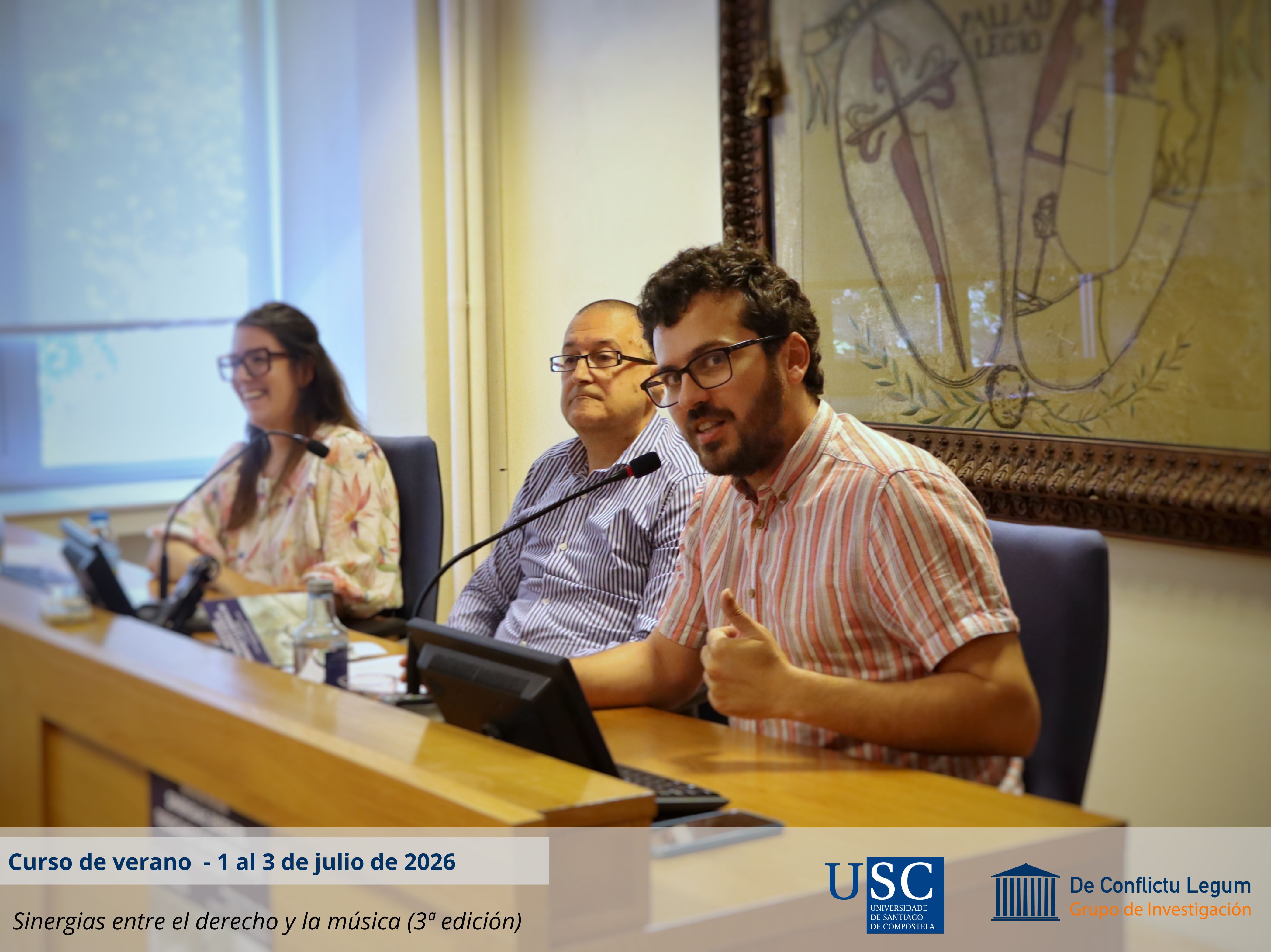
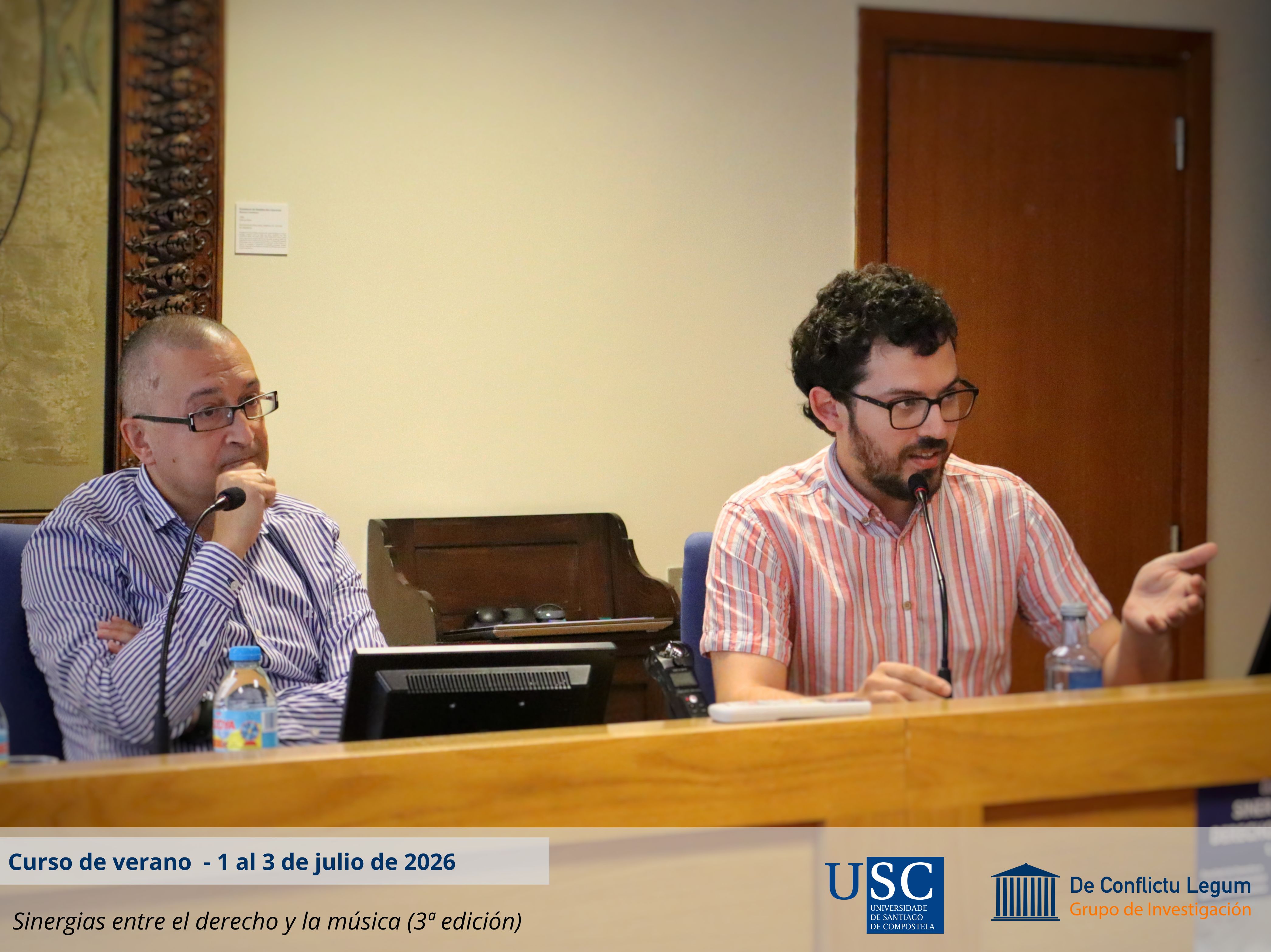
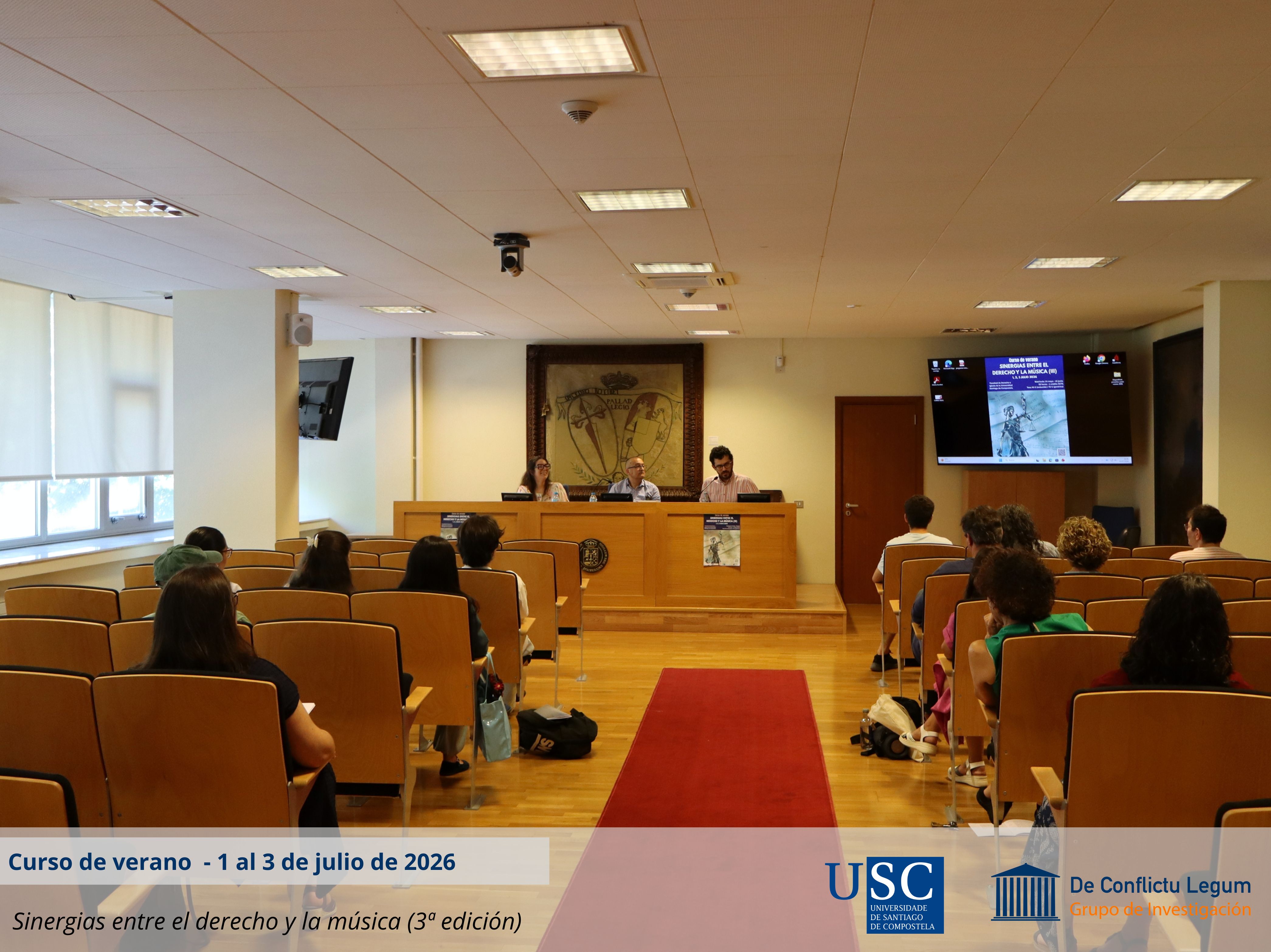
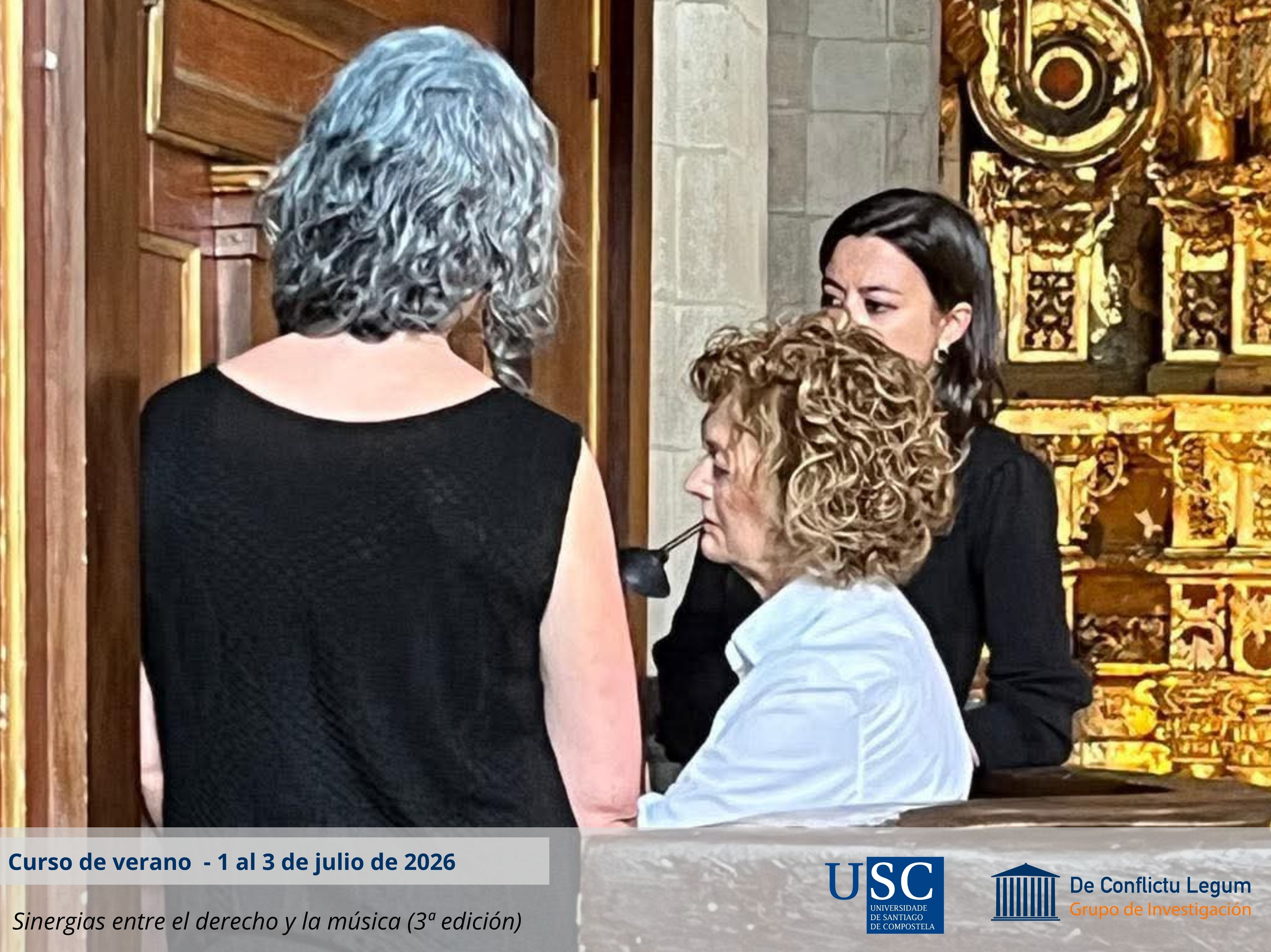
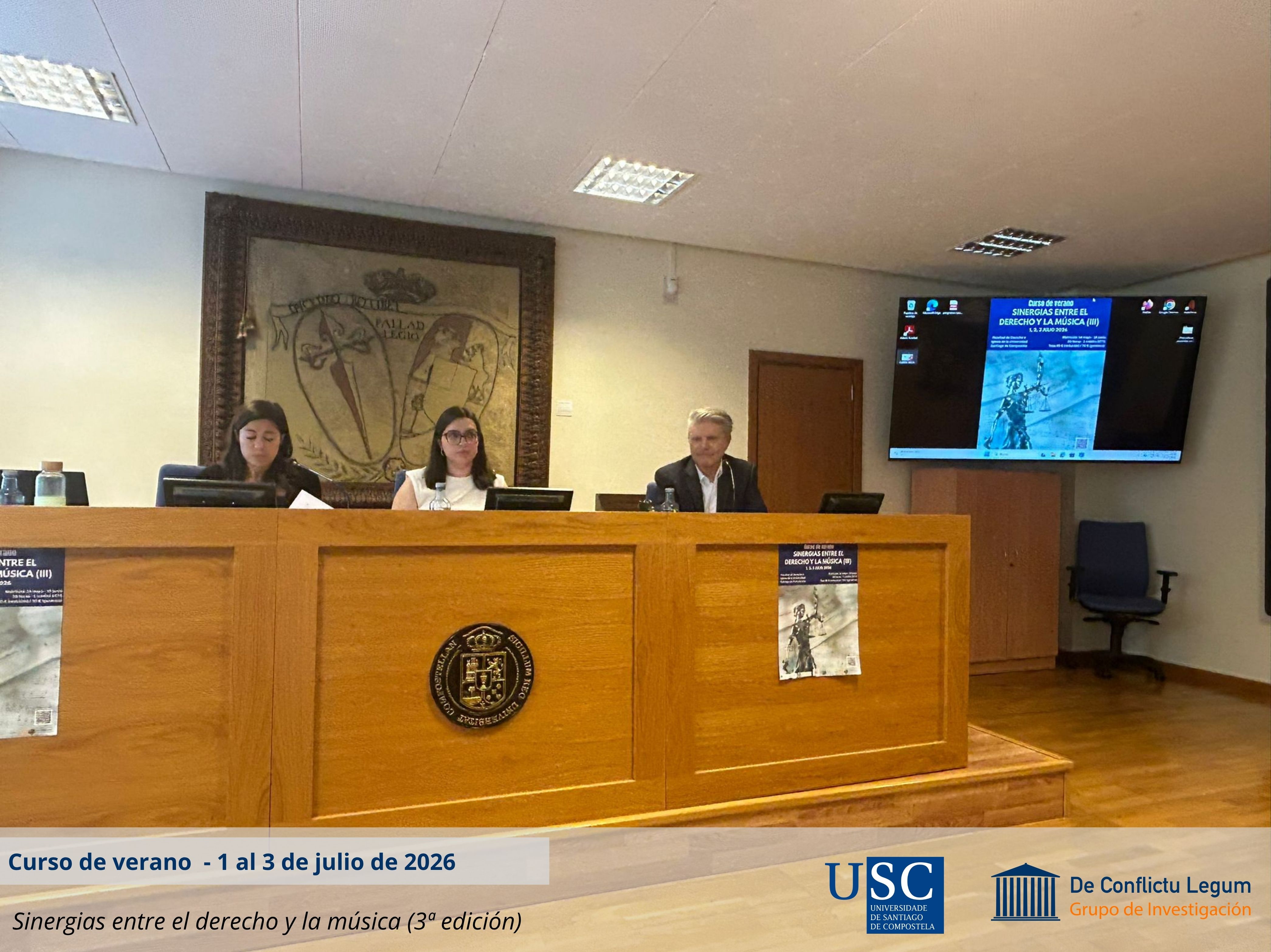
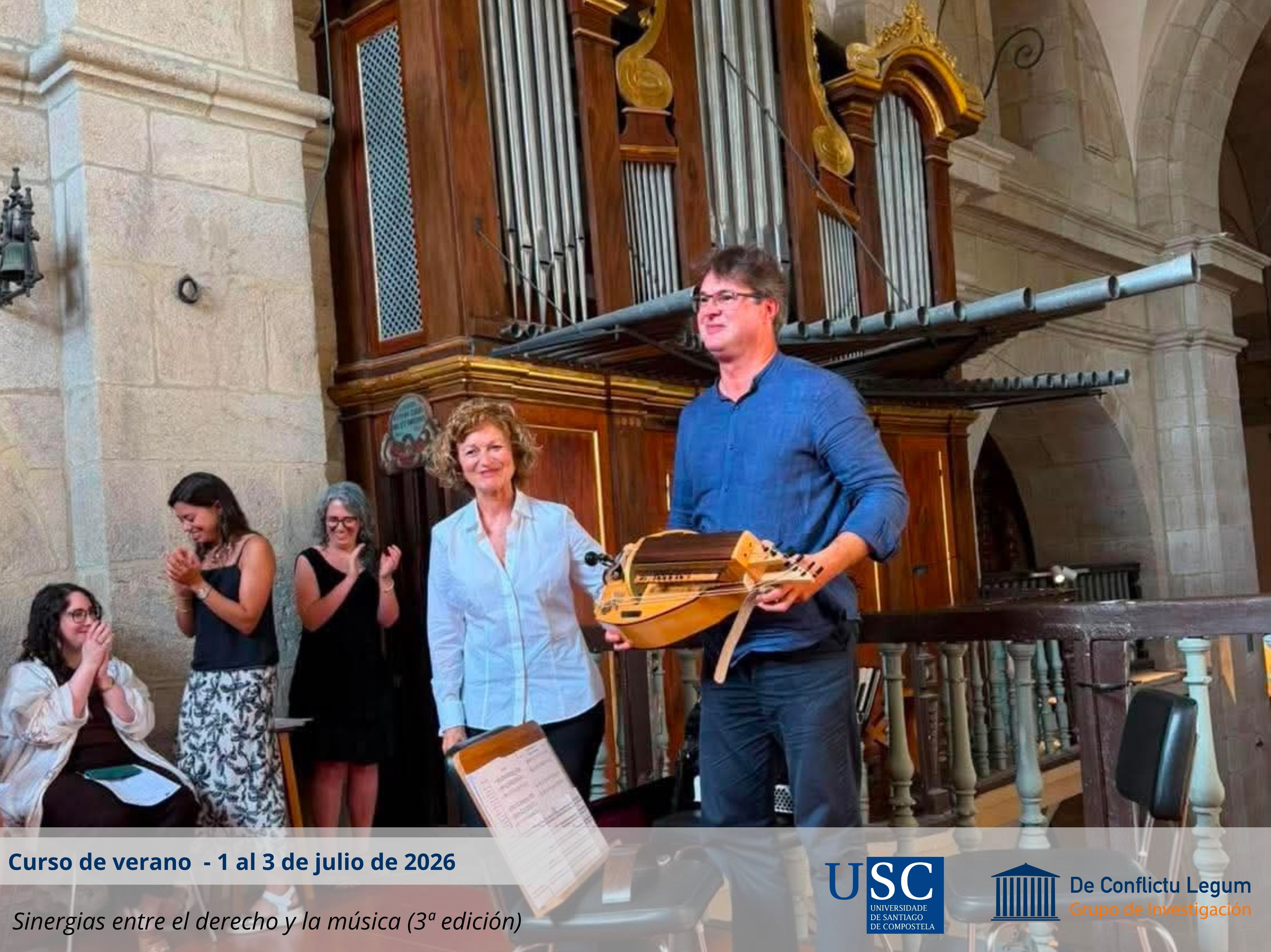
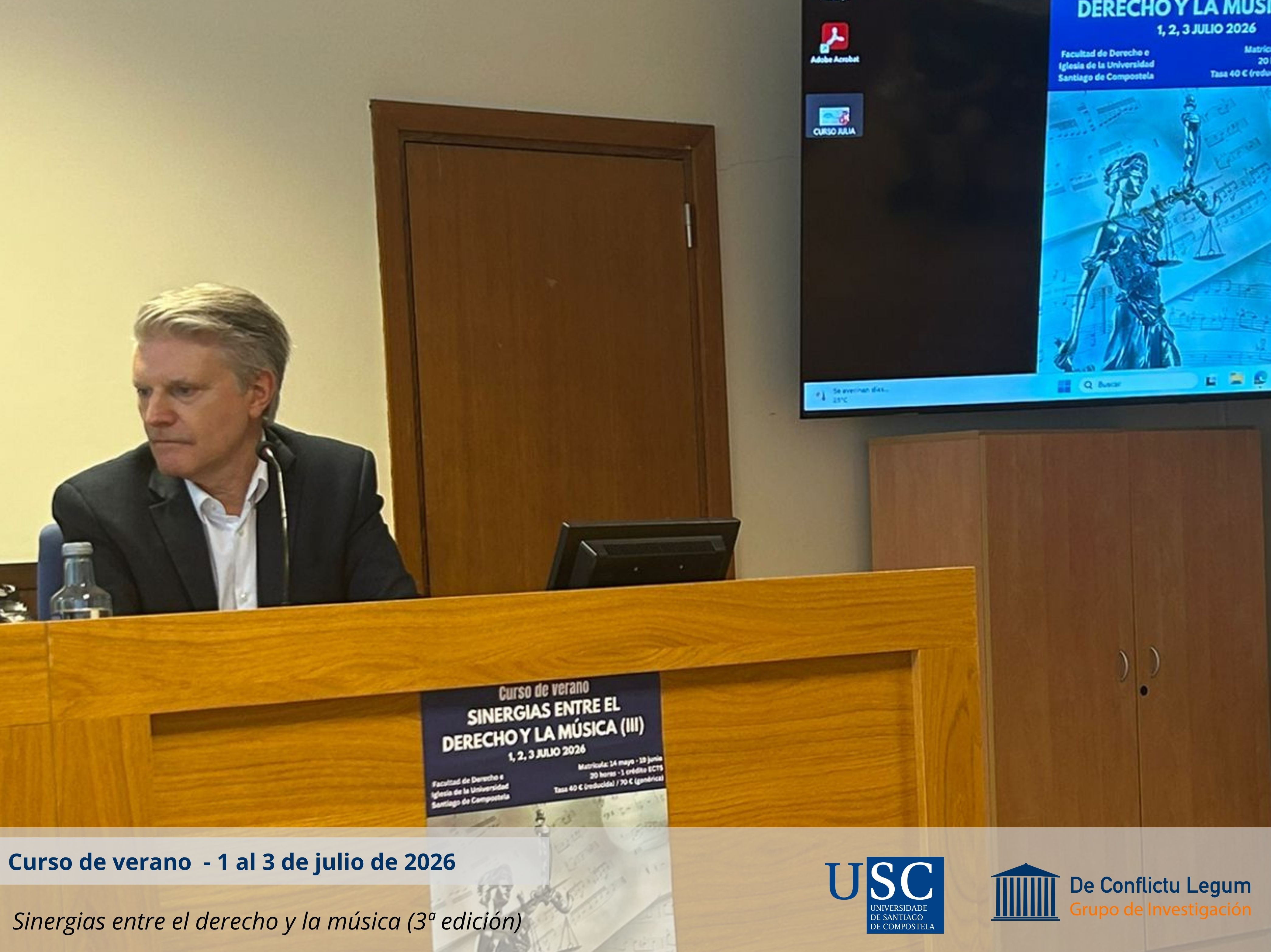
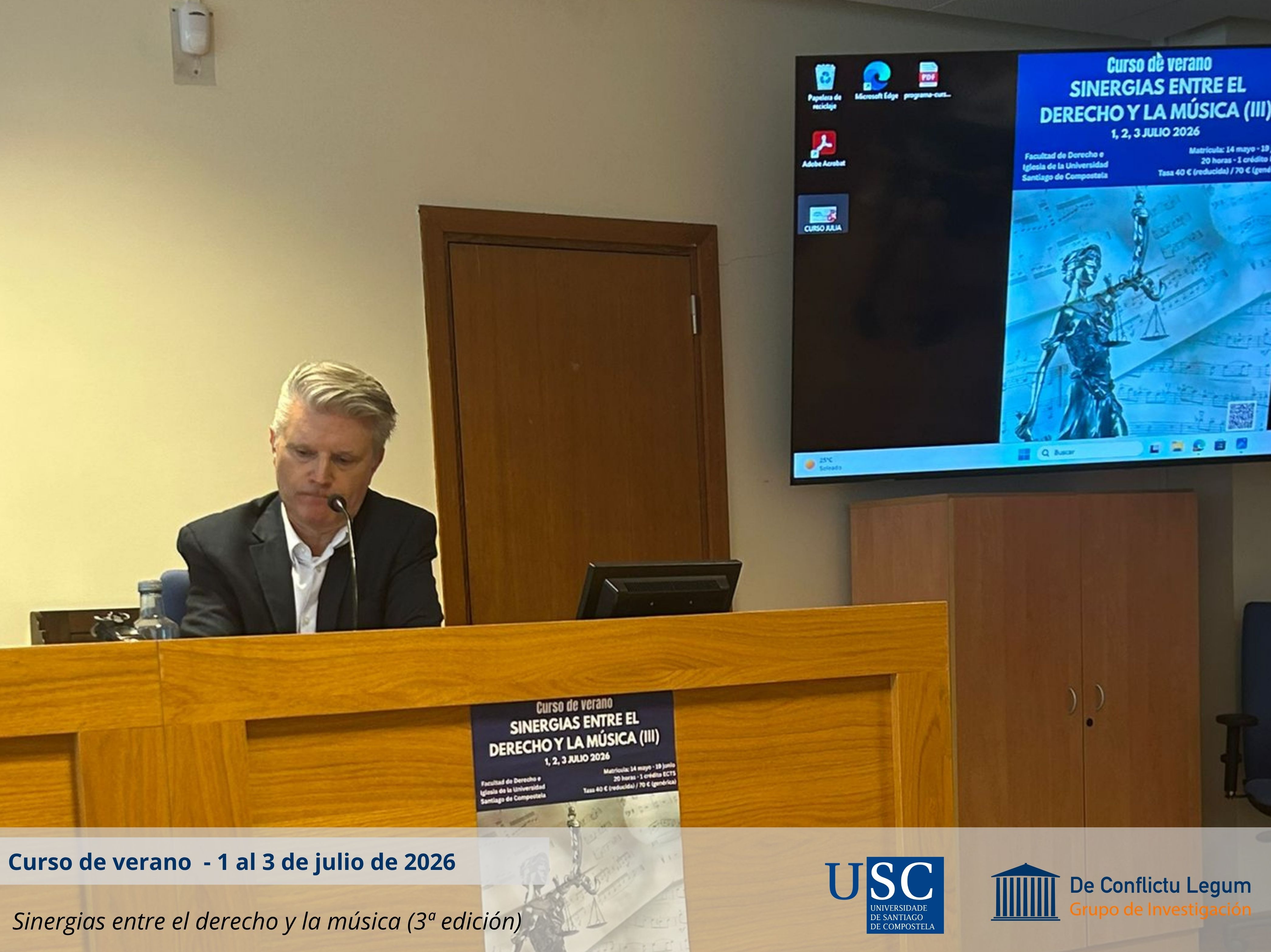
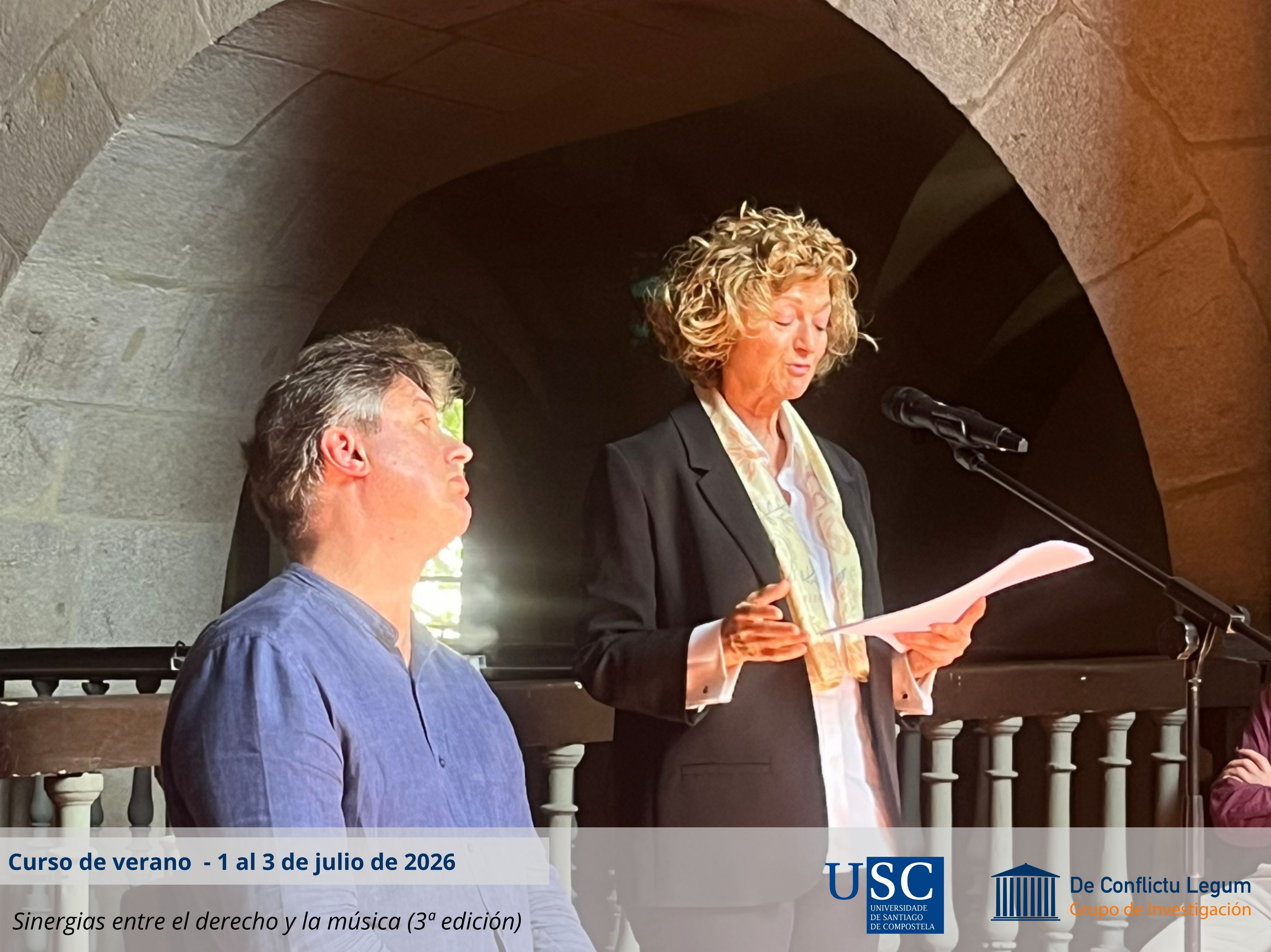
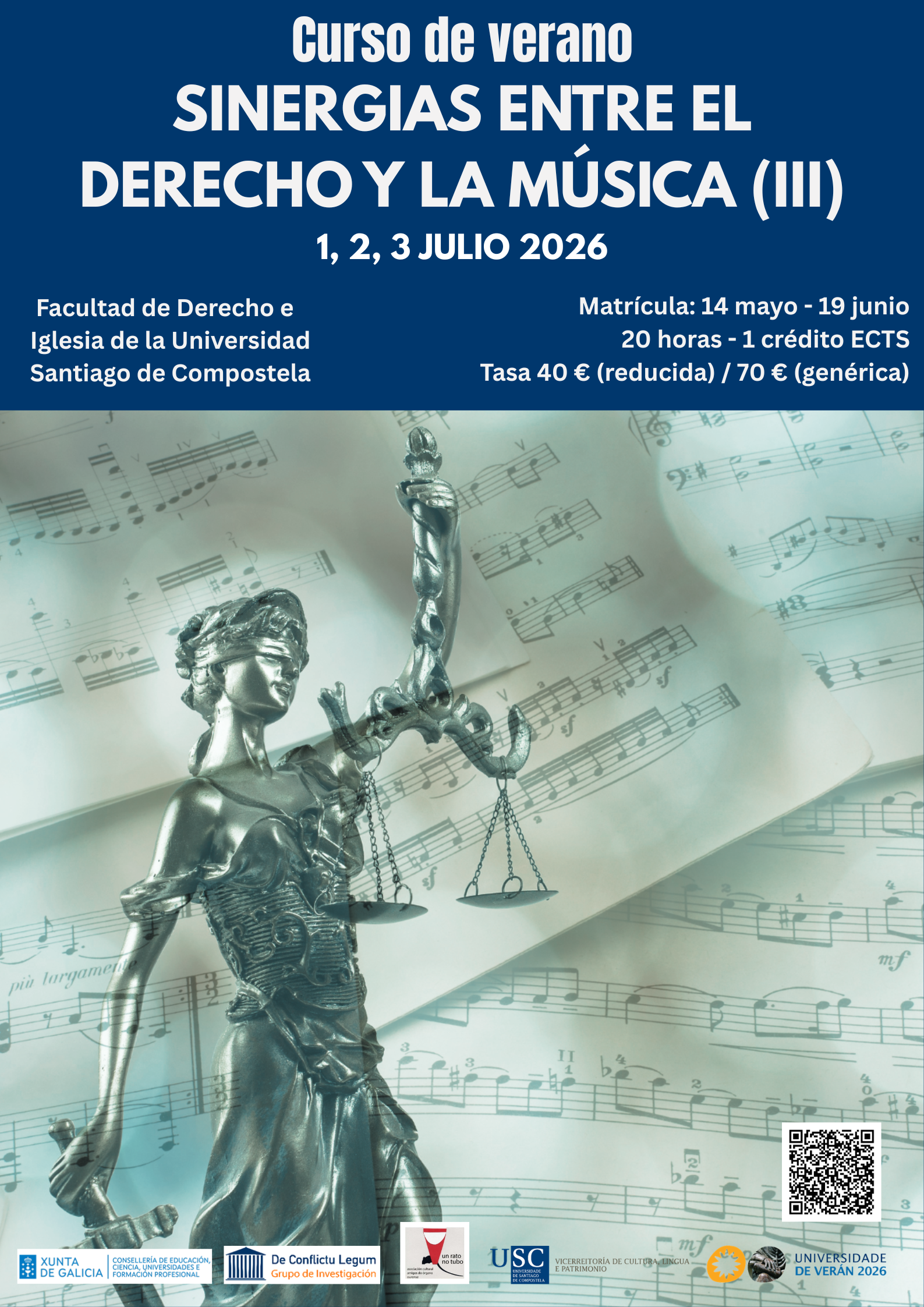
- The third edition of the Summer Course 'Synergies between Law and Music' took place on July 1, 2, and 3, 2026, at the Faculty of Law and the University Church. Organized by the De Conflictu Legum group, for this edition we invited professors from Coimbra, Zaragoza, A Coruña, Oviedo, Madrid, Ourense, Valladolid, and Santiago de Compostela. The program consisted of six panels and two workshops, interspersing legal analysis alongside musical analysis throughout all of them. The first panel, 'Opera and Law,' moderated by the Professor of Civil Law at this institution, Antonia Nieto Alonso, featured presentations by Encarna Roca Trías, Magistrate of the Supreme Court (2005-2012) and the Constitutional Court (2012-2021), and Fátima Yáñez Vivero, Professor of Civil Law at UNED. The former, starting from the plot of Shostakovich's opera Lady Macbeth, analyzed the relationships between music and power, as well as the limits that, depending on the prevailing political regime in each era and country, were imposed on the creative freedom of artists. The latter, using Puccini's opera Madame Butterfly—whose libretto was written by a jurist—as a guiding thread, illustrated various issues present in the work related to family law and contract law, from a comparative perspective between Japanese law of the time and Spanish law.Professors Jesús Delgado Echeverría, Emeritus Professor of Civil Law at the University of Zaragoza, and Paula Vega García, Professor of Civil Law at the University of Oviedo, formed the second panel on Artificial Intelligence and Music. Moderated by Celia Prados García, Professor of Civil Law at the University of Córdoba, the former started with the question of what 'legal music' means. From there, he built his presentation on reflections regarding Tchaikovsky's Jurisprudence March (1885) and Cristóbal Halffter's Human Rights Cantata 'Yes, Speak Out, Yes' (1968). For her part, the professor from Oviedo used different cases that have recently reached foreign courts, in which the originality of AI-generated works was debated, to explain the current state of regulation—or regulatory proposals—regarding intellectual property and AI systems.The afternoon session, moderated by the Professor of Civil Law at the University of Las Palmas de Gran Canaria, Carolina Meso Marrero, was reserved for the legal analysis of musical activity from different perspectives. The first of these was more practical, given the consolidated experience of Pablo Morán, a professional popular musician, who commented on the problems with the legislation of musical activity and the obstacles, both legal and bureaucratic, that musicians face in their daily lives. One of them, generated by the intermittency of musical activity itself, and only partially resolved by the different measures that are progressively shaping the (poorly named) Artist's Statute, relates to contribution bases and contribution days required to access social security benefits. Next, María Paz García Rubio, Professor of Civil Law at this university, focused her presentation on how the freedom of artistic creation is projected in contracts, which can be of a very diverse nature. She analyzed the remedies that would apply against those who breach the contract—whether the artist or the other contracting party—using examples that have reached Spanish courts where, in some instances, a fundamental breach by the music publishing company for not rendering accounts to the plaintiff musician was declared, with the court ruling the termination of the contract. Finally, lawyer Martín Bello Castro concluded the session by detailing the operation of copyright and related rights management organizations, such as those belonging to performing artists. He began with a three-tier analysis—composition, performance, and recording—explaining the different concepts under which one can hold intellectual property rights, as well as the different licenses that must be requested for the legitimate use of works or performances, and the various fees applied by the management entities.On Thursday, July 2, we began with the third panel, dedicated to the regulation of music education, which was moderated by USC Professor of Civil Law, Margarita Herrero Oviedo. Professor Antonio Embid Irujo, Emeritus Professor of Administrative Law at the University of Zaragoza, delivered a presentation analyzing the development status of the higher artistic education law approved in 2024, while comparing this regulation with the system in Germany, a country where such teachings are found both within the University itself and in the so-called Musikhochschulen (higher schools of music). From a practical perspective, the accompanist pianist and piano teacher at the Professional Conservatory of Music of Santiago, and member of the musical group 'Catro Quince,' Alejandra Escolante Mujico, spoke about her experience as both a teacher and a performer, and the current difficulties in reconciling the teaching and performing facets.The second morning panel, moderated by the course's student collaborator Lucía Rodríguez Lema, was dedicated to analyzing the taxation and labor regime of musical activity. First, USC Professor of Financial Law, César García Novoa, analyzed the advantageous tax treatment available to musical activity as a cultural expression, for example, regarding incentives for producers of musical shows. He also provided examples of different types of taxation depending on the case, considering whether the musical activity is carried out on a self-employed or employed basis, or if it involves groups constituted as companies. In turn, the Professor of Civil Law from this institution, Julia Ammerman Yebra, explained the differences between self-employment and employment contracts, as well as the novelties introduced in the legislation on artists, emphasizing the Draft Royal Decree regulating the special labor relationship of artists, which will replace RD 1435/1985.Thursday afternoon's session, as in previous years, was reserved for talks and a concert at the University Church. In this case, we hosted organists Marisol Mendive and Paulo Bernardino. The former, a concert performer and organ teacher at the Ourense Conservatory until 2023, spoke about the versatility of the Iberian organ in interpreting traditional Galician music. She reviewed the different ornaments—trills, mordents, turns—that can enrich melodies, and commented on the various forms and rhythms of traditional music that can be transferred to the instrument, all of which we could later observe in the pieces she performed on the organ. The composer, Coimbra organist, and choral conducting professor Paulo Bernardino explained how the hurdy-gurdy works, its use in traditional music, and its combination with the different sounds of an organ. During the concert that followed these presentations, attendees could hear the organ played solo by Mendive, but also accompanied by the hurdy-gurdy or the accordion played by Bernardino, in a program featuring music that combined traditional, classical, and even contemporary pieces. The audience was able to listen to Bernardino's work 'Canticum Valendicendi,' composed with reminiscences of the fado Balada da despedida do 5º ano jurídico da Universidade de Coimbra (academic year 88/89).The third and final day of the course was dedicated, as in previous years, to analyzing the interpretive phenomenon, in this case from the musical perspective, given that in previous editions the focus was on the legal specialty. Professor Paulo Bernardino, in a talk titled 'From Sound to Mystery: Paths of Hermeneutics in Sacred Music,' spoke of different symbolic figures that can be found in sacred music when scores are analyzed in detail, using engaging examples—such as the Chorale O Mensch, bewein dein Sünde Groß, or the Kyrie from Mozart's Requiem—which were played during the presentation.Finally, the gathering's last panel shifted toward the international sphere, featuring two professors of Private International Law, Irene Merino Calle from the University of Valladolid, and José Núñez Cerviño from this institution, moderated by Javier Maseda Rodríguez, professor of the same legal branch at the University of Santiago de Compostela. Both speakers based their talks on a well-known Eurovision case in which the existence of plagiarism between artists could be raised, using it to analyze issues of jurisdiction and applicable law in these cases.As in previous panels, the debate between the attending students and the faculty was intense; a constant in these courses, where the diverse backgrounds of students and academics enrich the discussions, both inside and outside the classroom. During the closing ceremony, the director of the De Conflictu Legum group, María Paz García Rubio, and the director of the summer course, Julia Ammerman Yebra, expressed their desire to hold more gatherings in the coming years, thanking both the University's Culture Department and all course participants—professors, students, moderators, and research group members—for their enormous dedication in ensuring that this summer event reached, once again, a successful conclusion.
Fotos del evento